
CULTURE · WHATSAKE STORIES
Sake in pop culture: beyond the screen
The cup is small. The stories are not.
Read the story
CHAPTER 01
Identify the drink before interpreting the scene
A shared cup can say something about hospitality, familiarity or a tense conversation. But a Japanese setting does not tell you what is inside the glass. Before treating a scene as a lesson about sake, identify the drink and the kind of story you are watching.
The distinction matters because fiction uses objects to tell a story. A cup, a bottle or a brewery can be a visual cue without becoming a documentary record of how everyone in Japan behaves.
A good way to approach sake in popular culture is to ask two questions: what does the work actually show, and what curiosity does it leave you with? The first keeps the interpretation honest. The second gives you a route into brewing, history or etiquette.
Sources: Focus Features: Lost in Translation
CHAPTER 02
Natsuko no Sake puts the brewery at the centre
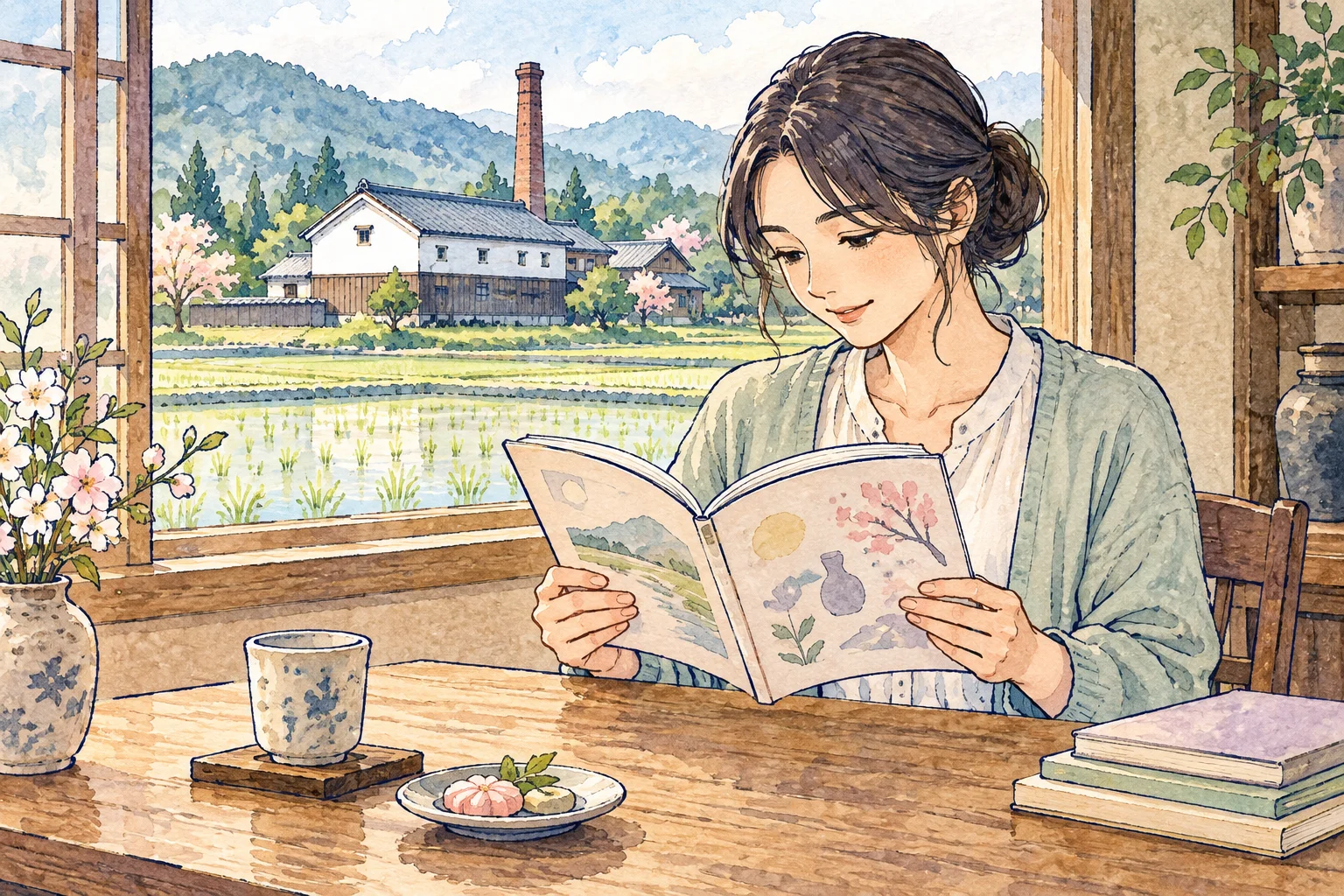
Akira Oze’s Natsuko no Sake is a particularly useful starting point because the subject is not just a drink in the background. The story follows a woman returning from advertising work in Tokyo to her family brewery and taking forward her late brother’s ambition involving Ryūnishiki rice.
The manga’s brewing narrative connects cultivation, family responsibility and the work behind a bottle. The television adaptation offers another route into that story. These are narrative elements you can discuss without claiming that the series caused a measurable change in sake consumption.
Follow the rice
Notice how a brewing ambition reaches back to growing and choosing an ingredient.
Follow the responsibility
Ask what the family business means to the protagonist, rather than reducing the plot to a tasting note.
Follow the work
Look for the decisions and relationships behind the finished product.
After reading or watching, compare your new questions with a real producer’s account. Fiction can invite you into a subject, while the maker’s information tells you how a particular bottle is made today.
Sources: Kodansha: Natsuko no Sake · Pony Canyon: television adaptation
CHAPTER 03
The Birth of Saké follows the people doing the work
Erik Shirai’s documentary The Birth of Saké takes a different approach. The filmmaker’s account describes access to Yoshida Brewery, the maker of Tedorigawa, and the seasonal workers involved in sake production.
That gives the subject a human scale. The bottle is the result of teamwork, skill and sustained effort. A documentary can show time and labour that disappear when you encounter only a finished label on a restaurant menu.
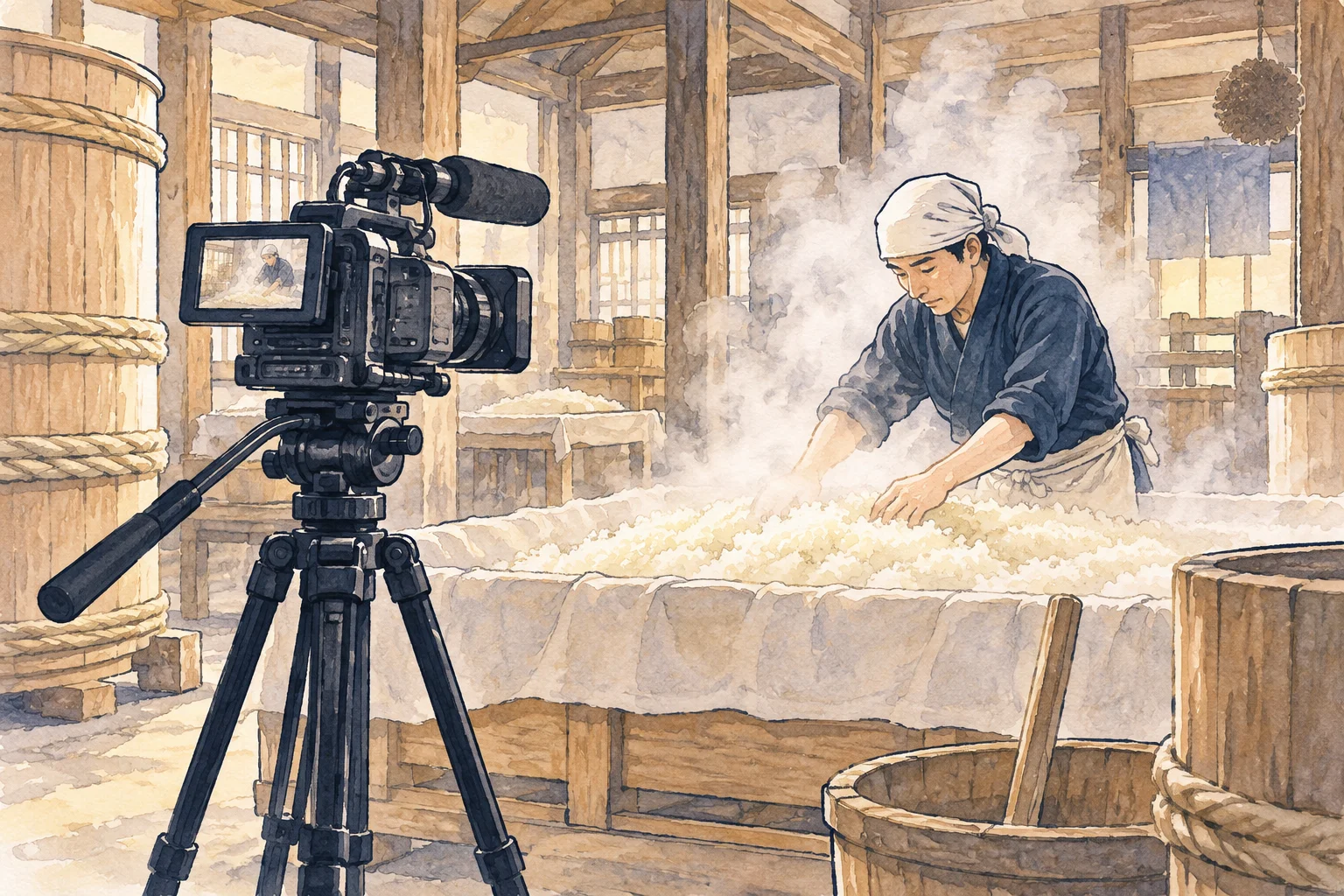
Watch how the work is organised and how the people speak about it. Which parts depend on routine? Which require judgement? What would you want to ask the brewery after seeing the film?
A documentary still has a viewpoint and an edited structure. It introduces one brewery’s experience; it does not establish that every brewery has the same team, tools or schedule.
Sources: Filmmaker: The Birth of Saké
You can continue with the Tedorigawa profile in our ten producers article, then explore the broader brewing pathway.
CHAPTER 04
Anime can mix cultural detail with deliberate style
Samurai Champloo is a useful reminder that a historical backdrop and contemporary style can share the same work. The official music feature describes its Edo-period setting and connection with modern hip-hop culture. Reading it as a straightforward reconstruction of the past would miss that deliberate mixture.
Shōwa Genroku Rakugo Shinjū centres on a world of performance and inherited craft. Its official anime site identifies the source manga and production team. That is a starting point for exploring cultural storytelling, not proof of a specific meaning behind an unverified drink scene.
When you notice alcohol in animation, keep the analysis close to what you can actually observe. A character’s behaviour, the setting and the pacing may matter more than treating the vessel as an etiquette diagram.
Avoid attributing an interpretation to a director unless there is a direct source for the statement. “This moment made me think about hospitality” is your reading; “the creator said sake symbolises hospitality” is a factual claim that needs evidence.
Sources: FlyingDog: Samurai Champloo · Official Rakugo Shinjū site
CHAPTER 05
A small viewing checklist
What is actually shown?
Identify the drink if the work gives you enough evidence. Do not assume every Japanese bottle contains nihonshu.
Who shares the moment?
Notice who serves, who accepts and what happens in the conversation.
What kind of work is this?
Documentary, historical drama and stylised animation support different conclusions.
What is your interpretation?
Keep your own reading separate from a verified creator statement.
What would you check next?
A producer’s page, a brewing explanation or a historical source may answer the new question.
The value of this checklist is that it leaves room for curiosity without turning an impression into a fact. You can enjoy a scene while recognising that it is a story, not a universal account of sake culture.
If a scene makes you curious about sharing and serving, our how to drink sake guide provides practical context. For the longer story, visit the history of sake.
CHAPTER 06
From a story to a better question
Did these works make sake exports rise?
This article does not claim a measured causal effect. A release and a market change happening near each other would not, by itself, prove that one caused the other.
Is screen etiquette a rulebook?
No. A scene is shaped by its characters, setting and creative choices. Use it as a prompt to learn, not as the only instruction for real situations.
Why focus on Natsuko no Sake and The Birth of Saké?
They have directly documented connections to brewing. That provides firmer ground than attributing sake symbolism to an unrelated drink scene.
Can I enjoy these stories without drinking?
Yes. The work, relationships, history and craft are interesting subjects in their own right.
Popular culture works best as a doorway. Follow it into the real questions: how is the rice grown, who makes the sake, and what does a particular brewery want its bottle to express?