
HISTORY & CULTURE · A CRAFT ACROSS CENTURIES
The history
of sake
Rice. Ritual. Reinvention.
How did rice become a drink with so many stories? Follow sake from early rice culture to temple brewing, bustling cities and the curious brewers keeping its story alive today.
Follow the timeline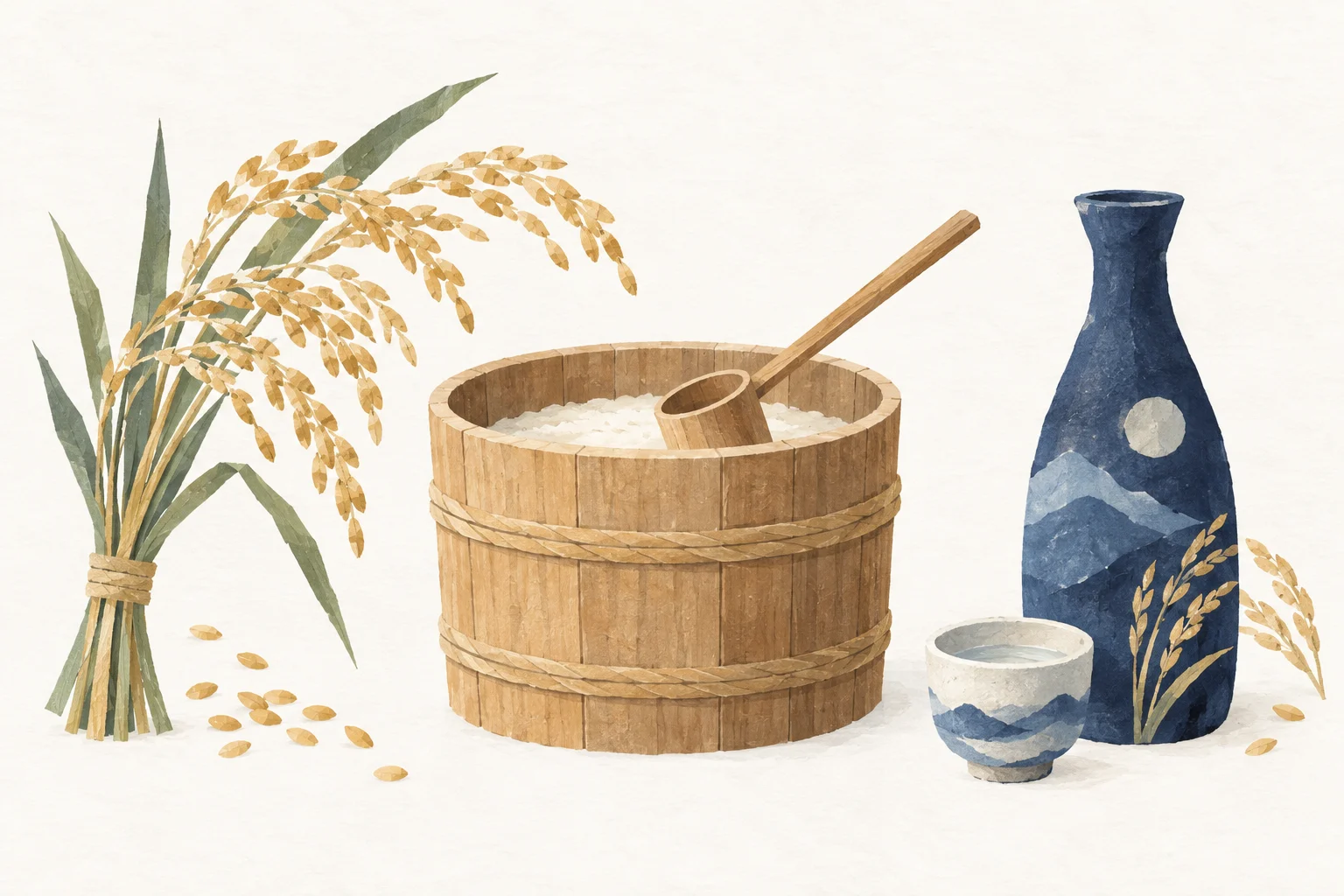
Illustrations evoke the craft rather than reconstruct a specific era.
THE STORY AT A GLANCE
A sake history timeline
Choose an era to discover the idea it added to the story. Then follow the pathway below.
A few milestones, rather than every event. Early origins are uncertain; documented developments give us firmer points along the way.
01 · ANCIENT ROOTS
Rice, ritual and the beginnings of sake
Sake’s story begins with rice culture, long before a modern sake label existed.
Rice-based alcoholic drinks in Japan have ancient roots. The Japan Sake and Shochu Makers Association points to a third-century Chinese account as an early written reference. A written record is a milestone, however, rather than an exact birthday for the drink.
Rice was also a precious offering. Sake became part of thanking the gods for the harvest, celebrating and bringing people together. Its cultural story is about what people shared as much as what they brewed.
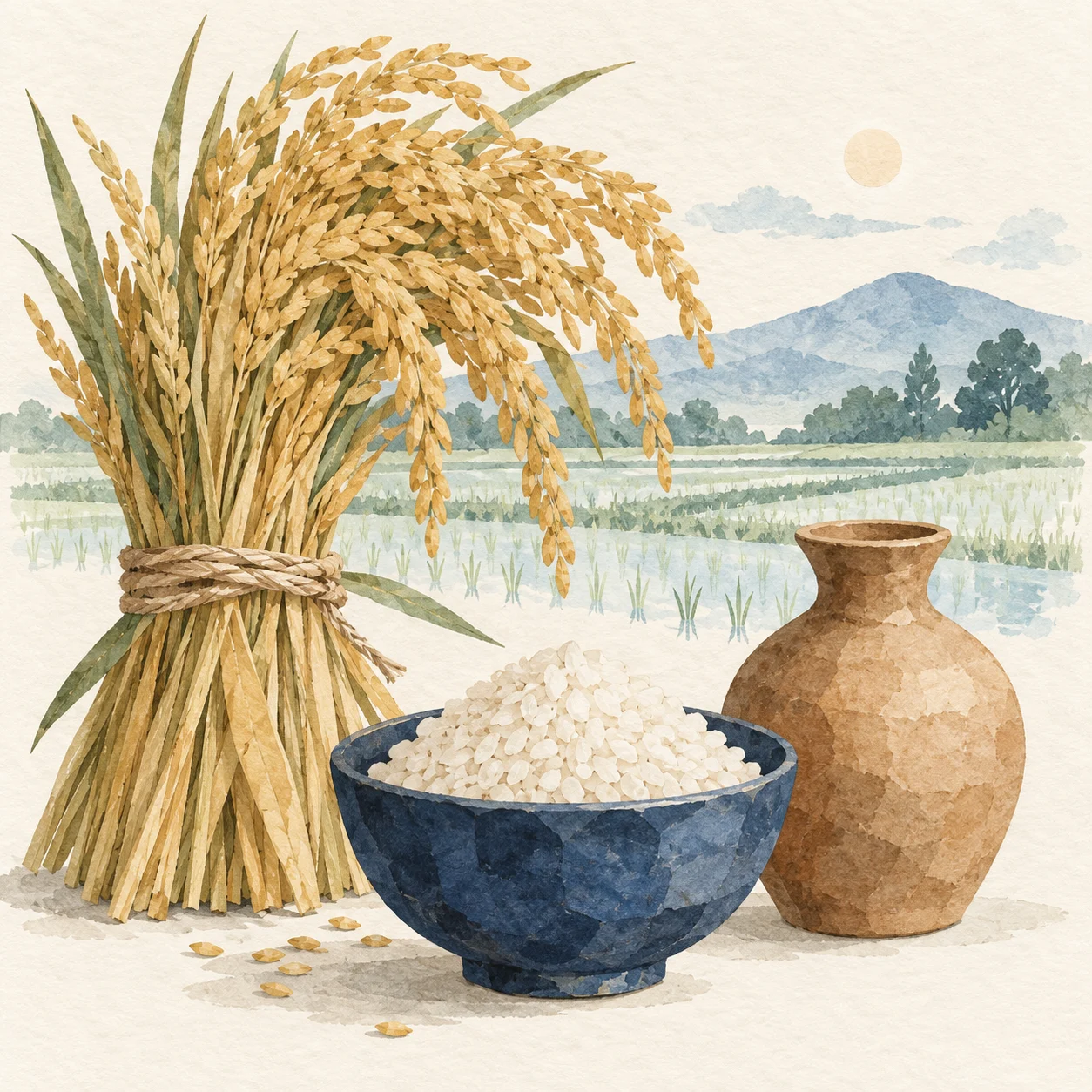
Think of sake as a craft that developed through generations. Early rice drinks should not be imagined as identical to the clear sake in a modern glass.
Source: JSS: the history of Japanese sake · JSS: sake and cultural traditions.
02 · NARA-PERIOD JAPAN
Sake enters the imperial court
In Nara, brewing was important enough to have an official place in government.
The imperial administration included an office responsible for sake production, known as Miki no Tsukasa. Nara Prefecture notes that its remains have been found at the Nara Palace site. Brewing was already a recognised activity with people, places and responsibilities behind it.
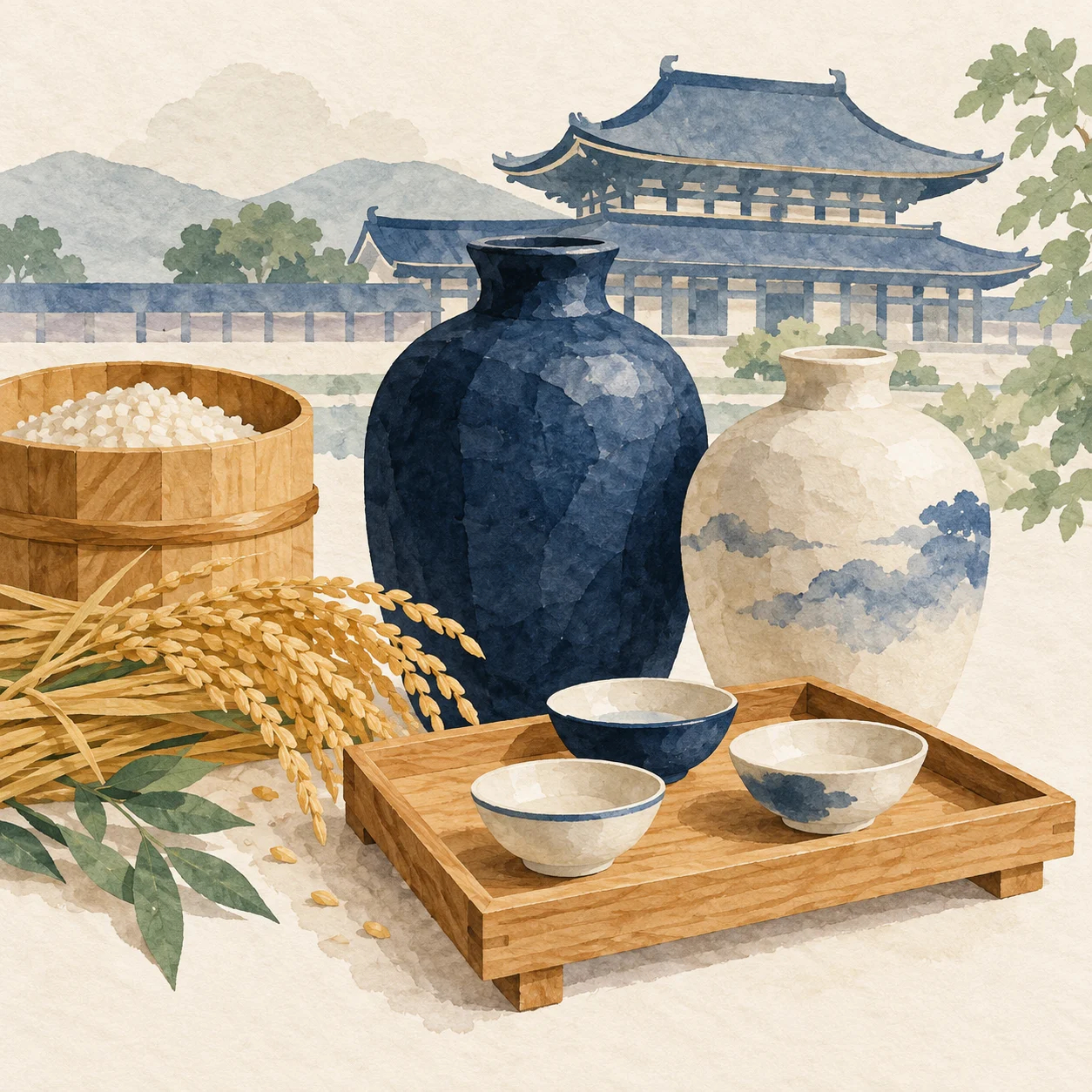
A drink with an official role
Sake belonged to the world of the court as well as religious practice. Its history is bigger than the modern idea of choosing a bottle for dinner.
A continuing ritual connection
Nara’s Ohmiwa Shrine enshrines a deity associated with sake brewing. Kasuga Taisha also preserves a historic sake brewery where brewing continues.
Its court, shrines and temples connect several chapters of sake history. Calling it a birthplace of refined sake recognises this contribution; it does not settle the earliest origin of every rice-based drink.
Source: Nara Prefecture: Nara and sake.
03 · MEDIEVAL JAPAN
Temple breweries develop the craft
Temples were places of brewing knowledge as well as prayer.
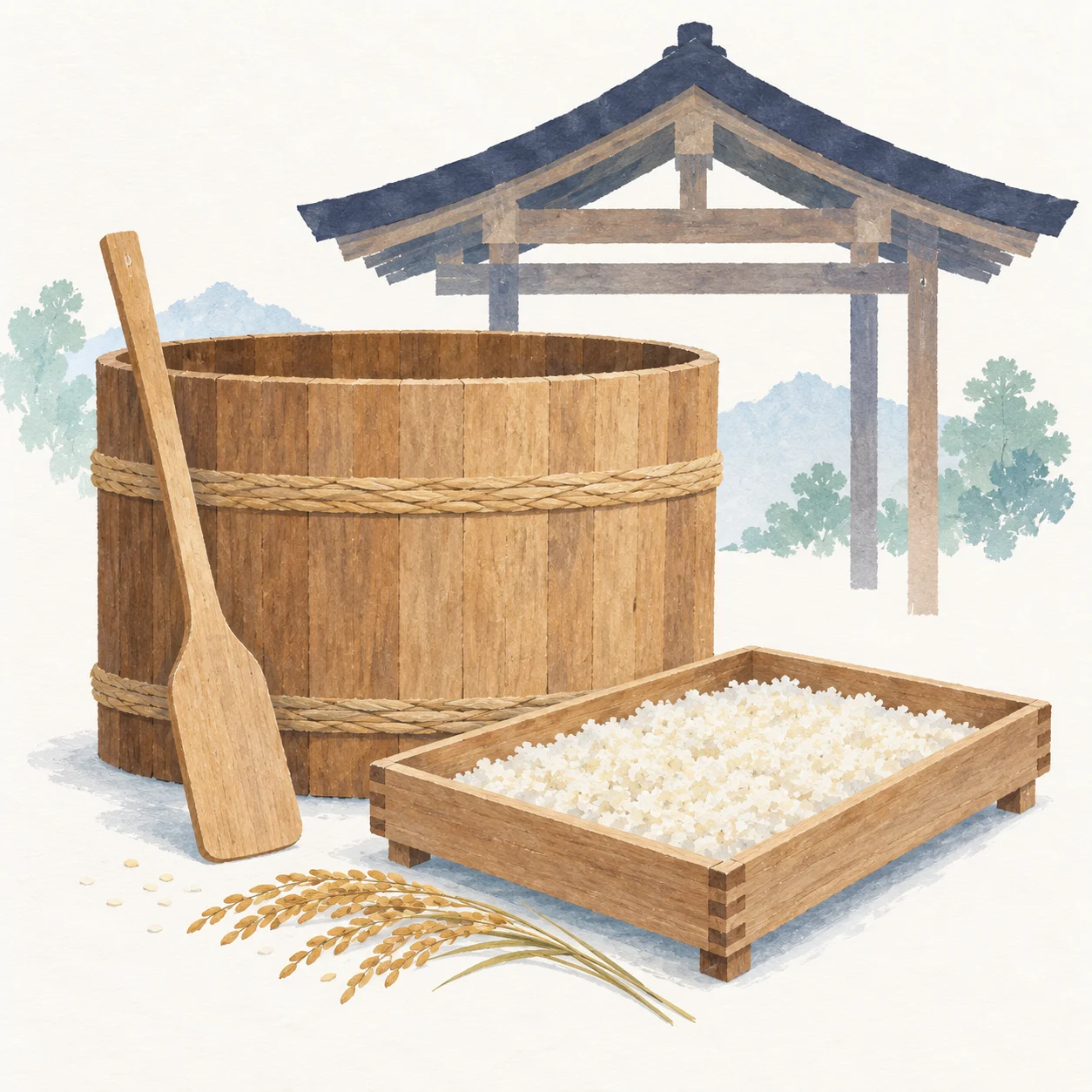
Nara’s temple-brewed sake was known as sōbōshu. Nara City describes Shōryaku-ji as a key place in the development of techniques underpinning modern sake, around six centuries ago.
One thread still connects that history to the present: bodaimoto, a traditional yeast starter associated with the temple. Its production was interrupted and later revived. Preserving a method can involve rediscovering it, rather than an uninterrupted line from the past.
What is a yeast starter?
A small starter culture prepares the yeast for the main fermentation. The details vary by method. Our brewing guide shows where this fits into today’s process.
Historical source: Nara City: temple sake and the revival of bodaimoto. Starter explanation: Masumi: starting fermentation.
04 · EDO ERA
Sake travels from breweries to the city
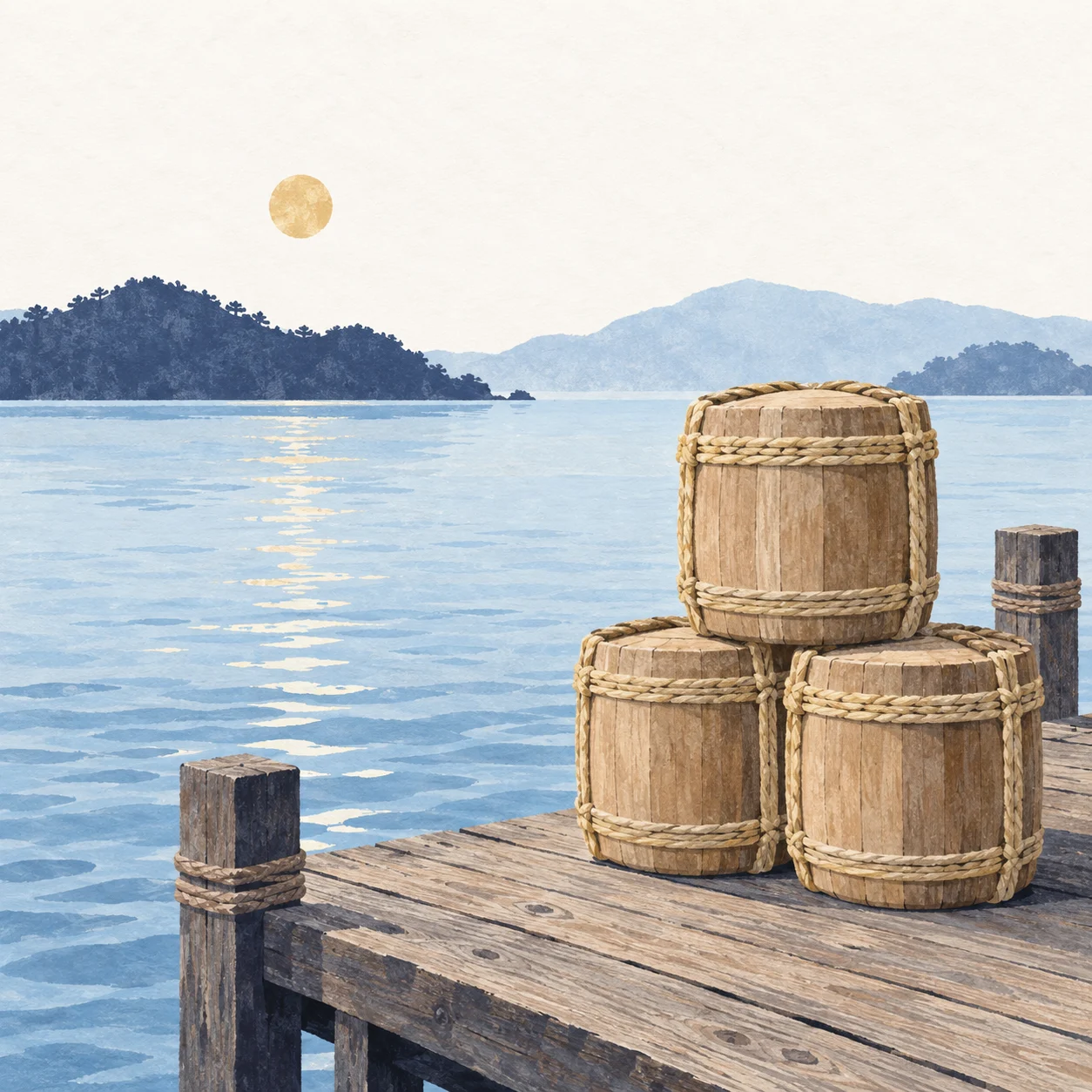
A growing city needed a lot of sake. Brewing and transport developed together.
During the Edo era, Nada grew into a major supplier to Edo, today’s Tokyo. Winter conditions, accumulated brewing knowledge and suitable water helped the region. Dedicated barrel-carrying ships connected production in the Kansai area with the capital.
This is a simplified trading connection, rather than a map of a particular voyage. Think about the practical challenge: producing sake was only half the story. Getting it to the people who wanted it was another craft altogether.
Brewing regions became known beyond their neighbourhoods. Later, rail transport helped other brewery centres reach wider markets too.
Source: JSS: the relationship between sake development and distribution. Explore today’s places in Regions & breweries.
05 · 1904 & THE TWENTIETH CENTURY
Science gives brewers new tools
Brewers could increasingly study the tiny organisms doing so much of the work.
In 1904, Japan established the National Research Institute of Brewing in Tokyo. Research and training helped develop brewing techniques, including work on sake yeast and koji mold. The first Japan Sake Awards followed in 1911.
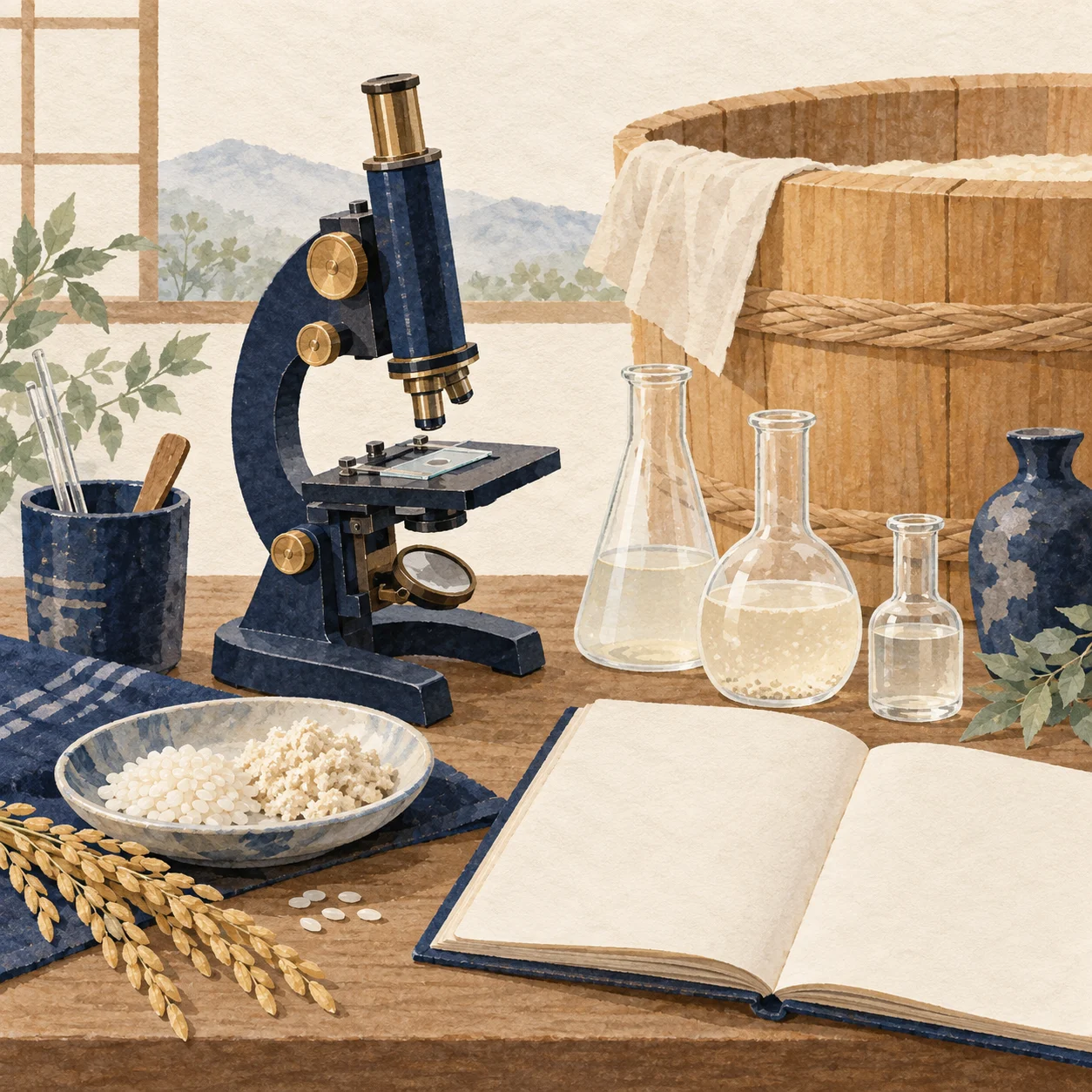
1904 · A research institute
A dedicated place for studying production, improving techniques and sharing knowledge with brewing professionals.
1946 · Number Seven yeast
A yeast isolated at Masumi in Nagano became Brewing Association Yeast Number Seven and spread to other breweries. One brewery’s discovery could influence many others.
Masumi’s account makes the story tangible: success at sake appraisals drew the attention of a scientist, who visited the brewery to investigate its fermentation vats. Behind a numbered yeast on a modern label, there can be a very human story of observation and discovery.
Does science replace the brewer’s skill?
It adds tools for understanding the process. Temperature, timing and the condition of a culture still require judgement. Today’s craft combines practical experience with knowledge of fermentation.
Sources: NRIB: establishment, training and yeast milestones · Masumi: the story of Number Seven yeast.
06 · LATE TWENTIETH CENTURY ONWARDS
New styles open new possibilities
An old brewing tradition can still produce a surprising glass.
JSS describes the growing popularity of aromatic ginjo sake in the 1980s. But sake’s evolution is not a simple march toward one “best” style. Brewers have also explored different strengths, textures and bubbles.
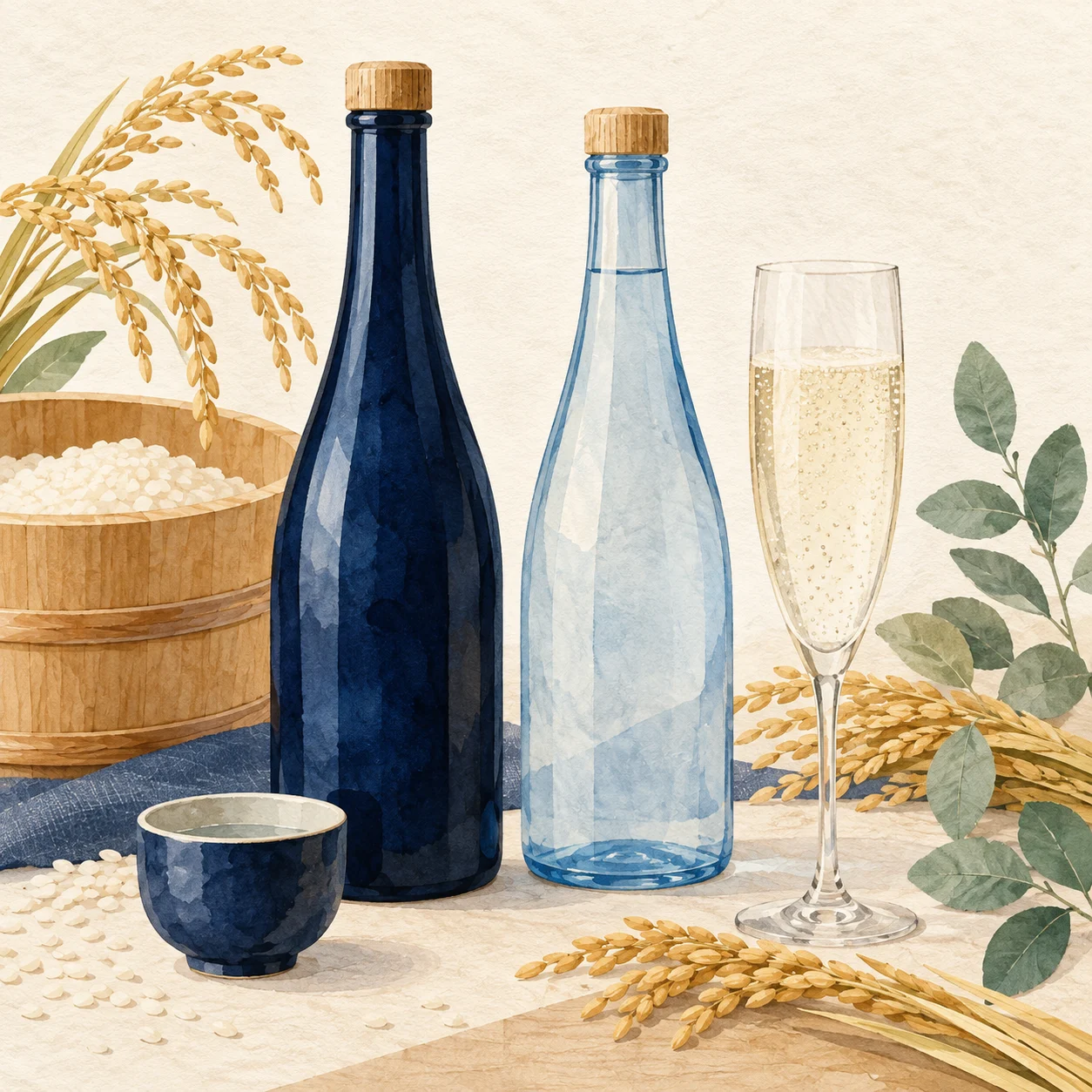
1998 · Suzune
Ichinokura launched Suzune on 8 July 1998. The brewer describes years of development behind this low-alcohol, bottle-fermented sparkling sake.
2008 · Mizubasho Pure
Nagai’s Mizubasho Pure arrived in 2008 after a long development process, combining sake brewing with secondary fermentation in the bottle.
These are two examples, rather than a claim that either invented all sparkling sake. They show how brewers can use an established foundation to explore a different drinking experience.
Curious about what is in the glass? Our sparkling sake guide explains how the bubbles happen, while Sake types & styles helps you read the label.
Sources: JSS: modern sake developments · Ichinokura: Suzune’s development and launch · Mizubasho Pure: 2008 launch.
07 · 2024 & BEYOND
A living tradition, recognised by UNESCO
The heritage is something people know how to do—and pass on.
In 2024, UNESCO inscribed traditional knowledge and skills of sake-making with koji mold in Japan on its Representative List of the Intangible Cultural Heritage of Humanity.
The recognition concerns knowledge and skills, rather than an award for a particular bottle. Its scope also reaches beyond nihonshu to other Japanese drinks made using koji, including shochu, awamori and mirin.
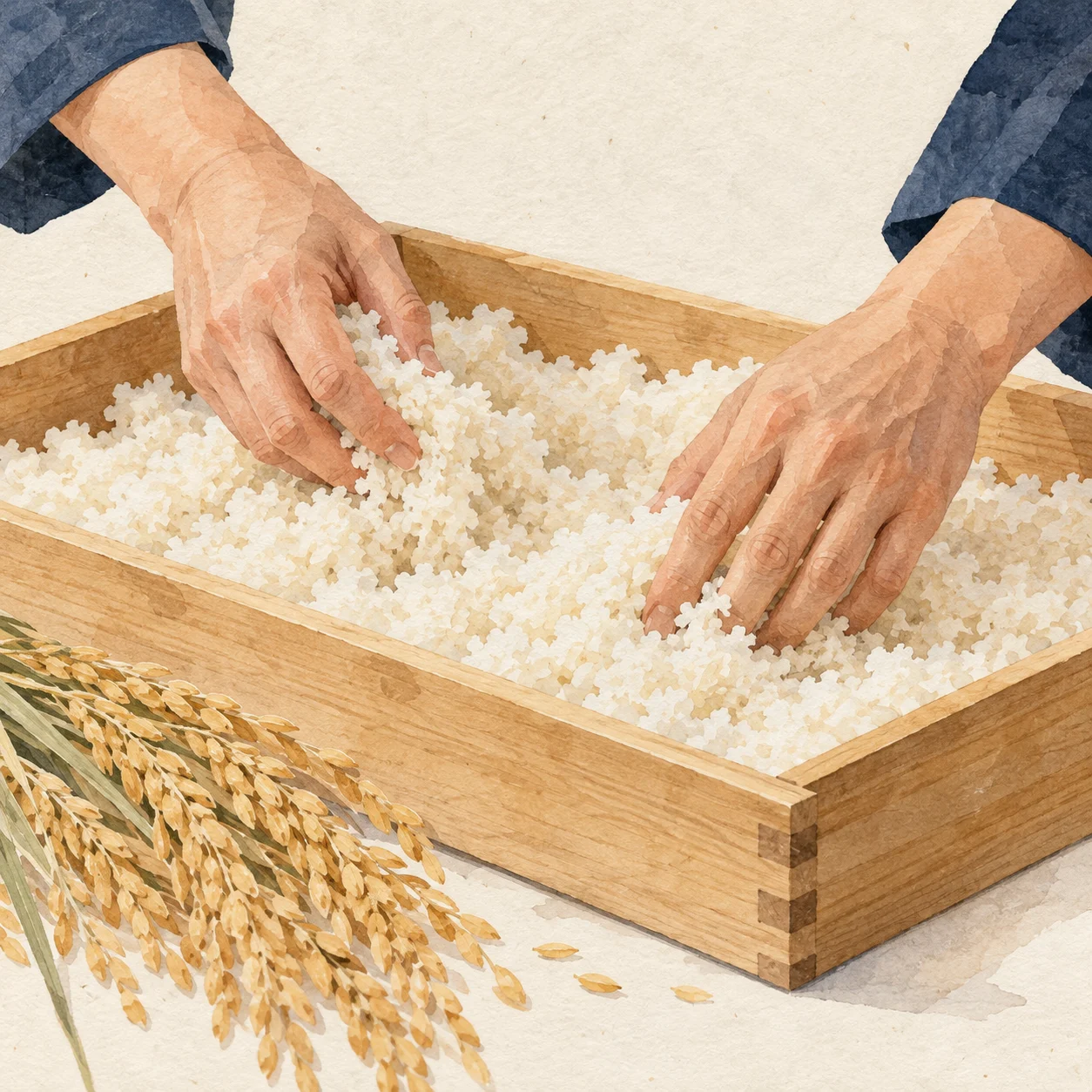
People carry the craft
Master brewers and brewery workers develop and transmit practical knowledge through experience.
Place influences practice
Methods have developed in response to regional climates and natural conditions. Tradition includes local differences.
Preserving knowledge and trying something new can coexist. The next interesting sake may connect familiar ingredients with a brewer’s fresh idea.
Sources: UNESCO: 2024 inscription · Japan’s National Tax Agency: the craft and its scope.
08 · THE QUICK ANSWERS
Questions about the history of sake
When was sake invented?
There is no certain single date. Rice-based drinks have ancient roots; early written references document part of a longer development.
Why is Nara called a birthplace of sake?
Its court, shrines and temple breweries contributed to refined sake and brewing techniques. The phrase celebrates that role rather than identifying the first fermented rice drink.
Was sake always the same as it is today?
No. The techniques, distribution and range of styles developed over time. Even today, one bottle cannot represent every sake.
What did UNESCO recognise in 2024?
Traditional knowledge and skills of sake-making with koji mold in Japan. It recognises a living craft, not a ranking of sake brands.
How can I explore this history through tasting?
Ask a sake specialist about a bottle’s brewery story, starter method or yeast. Compare a traditional-method sake with a sparkling example and describe what you notice. They are contemporary interpretations, rather than time machines to a historical flavour.
Historical references: JSS · Nara Prefecture · National Tax Agency. The tasting prompt is WhatSake’s suggestion.