
EXPLORE SAKE BY TOPIC
Sake regions
& breweries
A little geography.
A lot of character.
Snow country. Coastal towns. Mountain water. Travelling master brewers. Follow the places and people that help make Japanese sake taste the way it does.
Explore the sake map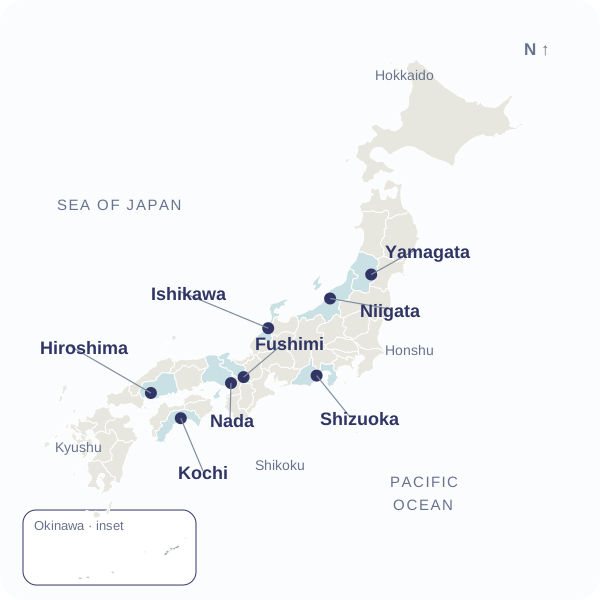
Its story often travels further.
01 · GET YOUR BEARINGS
A sake map of Japan
A region gives you a clue. The particular bottle gives you the answer.
Start with eight places that tell different brewing stories. These are selected examples, from prefectures to smaller brewing districts—not a ranking or a complete map of Japan’s sake.
“Light”, “fruity”, “dry” and “rich” describe different things. A fruity sake can finish dry; a rich sake can still feel clean. Regional reputations are starting points, not flavour guarantees.
Map geography: Natural Earth, public domain. Regional sources are linked in each story below.
02 · WHAT PLACE BRINGS TO THE GLASS
Why does sake taste different by region?
The landscape helps set the conditions. People decide what to do with them.
Water
Its mineral balance influences fermentation. “Hard” and “soft” are useful clues, but water alone cannot predict the finished sake.
Rice & yeast
Local rice varieties and regional yeast development can give brewers a shared toolkit. Rice can also travel across prefectural borders.
Climate & technique
Cold winters helped shape slow brewing traditions. Modern cooling lets brewers create delicate styles in warmer places too.
The dinner table
Local food and drinking habits helped shape the sake people wanted to share with a meal.
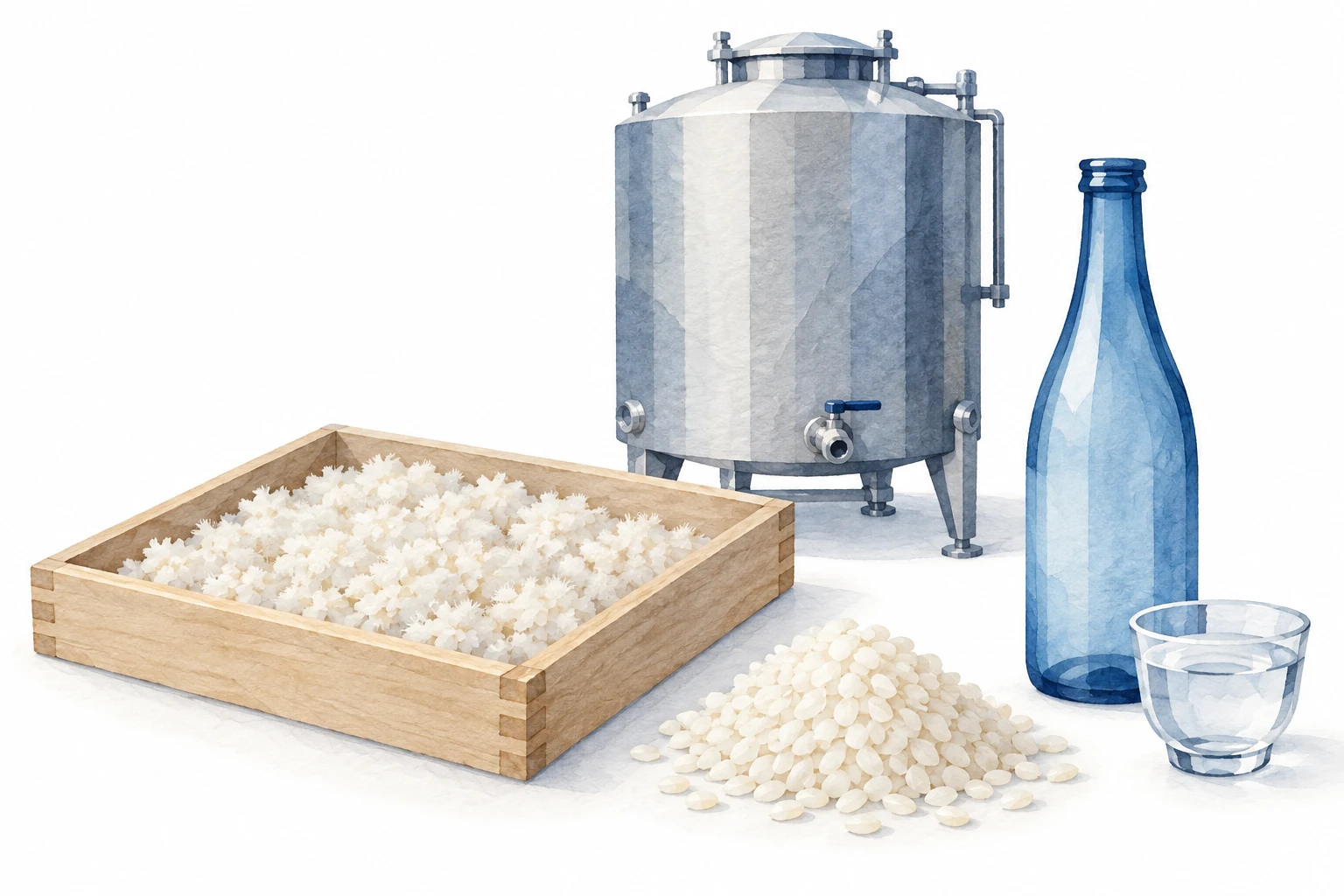
The brewery turns them into a style.
Source: Japan Sake and Shochu Makers Association: sake regionality.
03 · EIGHT PLACES, EIGHT WAYS IN
Regional sake styles worth exploring
Think of these as tasting invitations, with room for exceptions.
The coloured tags give you words to ask for in a shop. Suggested categories are loose starting points; a brewer’s description of the specific bottle is more useful than its postcode.
04 · THE PEOPLE WHO CARRIED THE KNOWLEDGE
Toji guilds: brewing traditions that travel
A brewery has a home. Its expertise may have arrived from somewhere else.
A toji is the master brewer who leads production and its people. A toji guild is an association and a lineage of training: a way to pass on skills, experience and judgement. Historically, seasonal teams left their home areas to work in breweries elsewhere.
Nanbu toji
Home area: Iwate
The Miyagi brewers’ association connects Nanbu craft with careful, slow, low-temperature brewing and a clean, dry style. Its influence in neighbouring Miyagi makes the travelling-knowledge story easy to see.
Echigo toji
Home area: Niigata
The experience of Echigo brewers is part of Niigata’s tanrei story. Think of accumulated practical skill, rather than a formula that makes every member’s sake identical.
Noto toji
Home area: Ishikawa’s Noto Peninsula
Naohiko Noguchi, a celebrated Noto toji, is an example of this lineage’s connection with yamahai craft. His institute is in Komatsu, outside the Noto Peninsula: a useful distinction between a guild’s home and a brewery’s location.
Tanba toji
Home area: Hyogo · historic Tanba
Also written Tamba. Its strong connection to Nada illustrates how master brewers adapt their skills to the water, weather and goals of the brewery where they work.
Guild origin, mentors and techniques.
Local water, the brewery’s aims and the particular bottle.
How did different guild traditions meet in Shizuoka?
Shizuoka’s GI history describes brewers arriving from Hiroshima, Noto, Echigo and Nanbu backgrounds. Local research then helped shape Shizuoka ginjo. A regional style can emerge from an exchange of ideas, not just one inherited school.
Does every brewery use a guild-trained toji?
Brewing teams vary. Some work through seasonal guild networks; others rely on full-time staff or family members. Apprenticeship, scientific education, technical institutes and training courses all contribute to modern sake. A guild connection is a useful story to ask about, not a requirement for enjoying the bottle.
Sources: JSS & NRIB: breweries, toji and historical home areas, pp. 45–46 · Miyagi Sake Brewers Association: Nanbu craft · Niigata brewers: Echigo skills · NTA: Tanba and Nada · Noguchi Naohiko Sake Institute: Noto lineage and Komatsu.
Hiroshima, Aizu, Sannai, Tajima and other brewing communities also belong in the wider story. The map introduces four lineages so you can see the pattern without trying to memorise them all.
05 · ZOOM IN FROM THE MAP
Meet the brewery behind the region
Two neighbours can share the same landscape and make very different sake.
People & intention
Who leads the brewing? Does the team want a quiet companion for dinner, a striking aroma, or a style that develops with age?
Ingredients & method
Which rice and yeast does the brewery choose? How does it make koji and the starter? Those decisions add detail that a regional label cannot.
Finishing & release
A nama release, a carefully matured bottle and a fresh ginjo can tell different stories—even under the same brand.
Tengumai
The brewery describes its aim as rich, bold sake using yamahai. Maturation and preserving the sake’s natural golden colour are part of its approach.
Yoshidagura u
The brewery’s modern yamahai approach emphasises fresh acidity, lively umami, gentle fermentation sparkle and lower alcohol. An inherited method can have a very contemporary voice.
Yoshida Shuzoten: Yoshidagura u (Japanese).
Two examples from the same prefecture using yamahai in different ways. These are producer descriptions, offered to illustrate variety rather than rank the breweries.
“I’d like something from this region with gentle aroma and a savoury finish. Which bottle shows that?” gives a shop or restaurant something concrete to work with.
What are kura, sakagura, kuramoto and jizake?
Kura is a storehouse; in sake conversation it often means the brewery. Sakagura is a sake brewery. Kuramoto can mean the brewery or its owner. Jizake means local sake; it is not a special-designation grade like junmai ginjo.
Want to follow a place into actual breweries? The national brewers’ directory lets you explore by prefecture. Check a brewery’s own information for its current range and visits.
Explore the JSS brewery directoryFurther reading: JSS: brewing choices and flavour · JSS: sake terms.
06 · PLACE ON THE LABEL
What does a sake GI tell you?
A geographical indication connects a protected place name with defined production standards.
A GI is more specific than casually calling a bottle “local sake”. To use it, a product must meet that GI’s requirements for origin, production and characteristics. The rules differ by area.
Yamagata
A regional GI that covers sake meeting Yamagata’s specification.
Nada Gogo
A defined coastal brewing area within Hyogo—not all of Hyogo Prefecture.
Hakusan
A GI centred on Hakusan City—not a label for every sake in Ishikawa.
Region: where the brewery is. Guild: a training lineage. GI: a protected geographical name with its own rules. They can overlap, but they answer different questions.
Does a GI guarantee I’ll like the sake?
It tells you the product meets a defined specification. It is not a universal taste ranking. Use the place name to explore, then choose by the bottle’s aroma, texture, sweetness, acidity and finish.
Sources: NTA: geographical indications · NTA: protected names and individual specifications. These are examples, not a complete or fixed list.
07 · BRING THE MAP TO YOUR TABLE
Three ways to taste regional differences
Keep one thing similar, change another, and notice what happens.
Use small pours, the same glasses and a similar starting temperature. These are suggested learning exercises, not scientific proof that geography caused every difference.
Niigata + Kochi
Choose two bottles described as dry, in a similar category.
NoticeDo they have the same weight and finish? “Dry” alone is not a complete flavour profile.
One region, different starters
Ask for a yamahai and a sokujo bottle from Ishikawa, ideally with similar rice and polishing.
NoticeTexture, acidity and savoury depth. The method and brewery can matter as much as the place.
One brewery, different bottles
Compare its food-focused junmai with its aromatic ginjo.
NoticeHow much variety one address can produce. A house style can have several voices.
Aroma · weight · sweetness · acidity · finish. Write one observation for each. Add the region afterwards, so the reputation doesn’t decide what you taste.
For glassware and a simple tasting method, head to Tasting & serving. For the difference between yamahai and sokujo, follow the yeast starter step.
08 · QUESTIONS THAT COME UP
Sake regions: common questions
What is the best sake region in Japan?
There is no useful single winner for everyone. Start with a style you enjoy: a restrained Niigata bottle, a fruity Yamagata ginjo, or a savoury Ishikawa expression might each be the right choice for a different moment.
Is northern sake dry and southern sake sweet?
That broad historical shorthand has plenty of exceptions. Kochi’s dry reputation is a good one. Modern temperature control, ingredient choices and brewery goals also make a simple north–south rule unreliable.
Does a sake region tell me where its rice grew?
Not automatically. A brewery may use rice grown elsewhere. Check the bottle or producer’s information, and read any GI rules individually rather than assuming that all the ingredients must come from the same prefecture.
Are ginjo and junmai regional styles?
They are sake designations used across Japan. A region may be known for particular expressions, but you can find ginjo, junmai and other categories in many places. Sake types & styles explains how those labels work.
Can I predict a flavour from the toji guild?
A guild is a clue to training and tradition. It cannot fully predict the sake: the brewery’s ingredients, equipment, aims and decisions shape the specific bottle too.