
How long does sake last after opening? A practical storage guide
The cap matters. The fridge matters. The number on a calendar needs a little context.
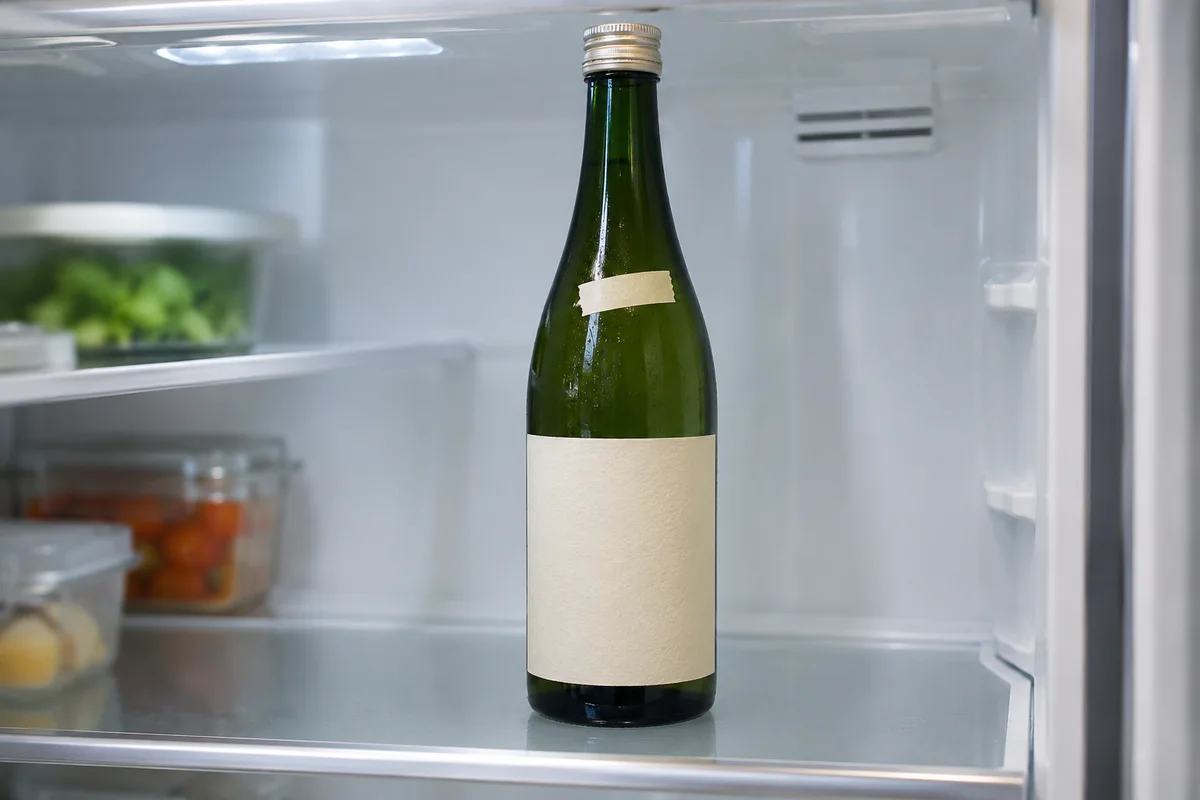
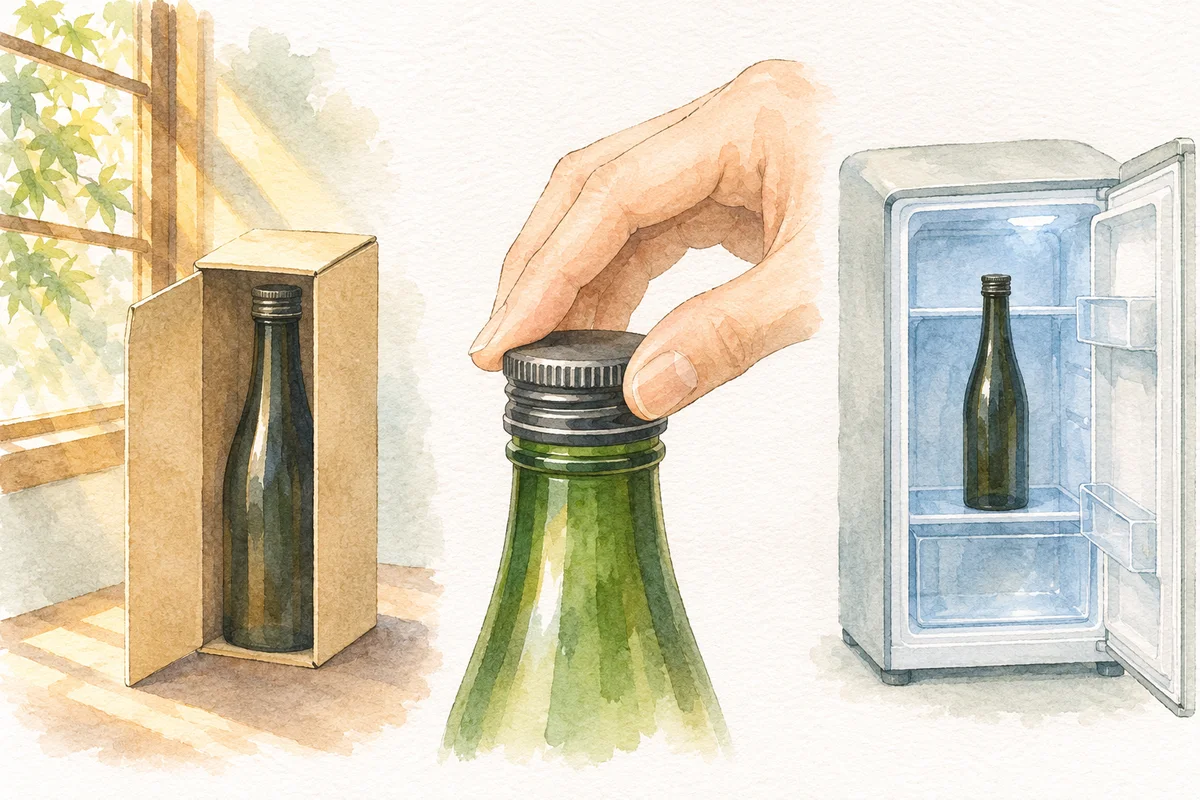
After opening sake, close it tightly and refrigerate it upright. Plan to enjoy it soon: some producers recommend a few days, while broader guidance ranges from about a week to a month. Follow the bottle’s instructions first, especially for unpasteurised or sparkling sake. Those different timelines describe keeping the intended flavour, not a universal expiry date. Here is how to make them useful in your own fridge.
In this article
In this article
Why the answers range from days to weeks
“How long does it last?” can mean two things: how long it resembles the brewer’s intended release, or whether a particular bottle is still suitable to drink. A general freshness window answers the first question. It cannot certify a bottle with an unknown storage history.
The sources are not all talking about the same product or promising the same result. Takara recommends a few days after opening. JSS recommends drinking ginjo and daiginjo within a week. WSET gives about two weeks for refrigerated open bottles generally. The National Research Institute of Brewing gives a general one-month guideline, with a tight seal.
Do not average those numbers or choose the longest because it is convenient. Start with the producer, then the style and storage conditions. If a bottle says to finish promptly, a general month-long guideline does not overrule it. Buying a smaller bottle is often a better solution than racing a large one to the finish.
What opening changes inside the bottle
Heat, light and oxygen are the three main storage enemies identified by the brewing research institute. Heat speeds changes in aroma and colour; light can create unwanted smells. Opening also introduces air, and the sake gradually oxidises. Oxidation means reactions involving oxygen, not that the drink suddenly turns bad at midnight on day eight.
Pasteurisation, called hiire, is a heat treatment used to help stabilise sake. Namazake has not had that treatment, so cold storage deserves particular attention. “Ginjo” describes a brewing category associated with delicate aromas; it does not tell you whether the sake is pasteurised. A bottle can be both ginjo and nama. Read the storage line, not just the impressive word on the front.
Choose storage by the bottle, not the price
For a simple home default, use the refrigerator and check that it meets the label’s temperature instructions. NRIB advises 4°C (40°F) or below for nama, sparkling sake and ginjo styles. A wine cooler set for red wine is not automatically cold enough for these bottles. Storage temperature and serving temperature are separate decisions: you can keep a bottle cold and warm only the portion you want.
Use these priorities as a shopping and storage checklist, rather than a countdown chart. If you cannot find instructions, send the retailer a photograph of the front and back labels and ask for advice on that exact bottle.
| Bottle | Priority |
|---|---|
| Pasteurised still sake | Follow the producer’s window; cap and refrigerate after opening. |
| Aromatic ginjo or daiginjo | Protect delicate aromas; plan an early revisit rather than saving it for weeks. |
| Nama / 生酒 | Maintain the required cold storage even before opening; follow the label closely. |
| Sparkling or active nigori | Follow pressure and opening instructions as well as refrigeration advice. |
Cloudiness is not a storage category. Nigori contains rice solids, but it can also be pasteurised, unpasteurised, still or sparkling. Our nigori guide and sparkling sake guide explain the handling differences. Do not shake an active bottle simply because a still nigori was served that way.
A five-minute routine that saves guesswork
Before the first pour, photograph the label and its storage instructions. Add the opening date to a removable tag or your notes, keeping the original label readable. If the bottle carries a date, check what it describes: a production or bottling date is not automatically a use-by date. Hakutsuru’s FAQ shows how its date codes work; another producer may use a different format.
Pour only what you intend to serve, then replace the cap and return the bottle to the fridge. Keep the neck and cap clean. Avoid leaving the whole bottle out through a long meal when a small serving vessel will do. Do not pour leftovers from someone’s glass back into it. This is ordinary good handling, not a ritual requiring specialist equipment.
There is no need to buy a preservation gadget before your first bottle. Nor is routine decanting essential: Hakutsuru explicitly discourages transferring sake for storage because of contamination risks. Keeping the original clean closure and following the producer’s instructions is a straightforward starting point. For a pressure-containing bottle, use only the closure and method the maker recommends.
Has it changed, or is something wrong?
A quieter fruit aroma is not the same observation as a strong, unexpected off-odour. WSET describes loss of freshness and balance among storage faults, and notes that light damage can create unpleasant burnt smells. Deliberately aged sake can have a different colour and aroma from fresh sake, so compare with the style the producer describes, not an assumption that all sake must be colourless.
Appearance and smell do not establish safety. If the closure is damaged, the contents seem contaminated, the bottle behaves unexpectedly or you cannot establish whether required refrigeration was maintained, stop and ask the producer or retailer. Do not taste a suspect bottle to prove it is fine, and do not use cooking as a rescue plan for it. A lost purchase is frustrating; guessing is not useful.
For an ordinary, properly stored bottle with no reason for concern, a short note makes normal flavour changes easier to recognise. Write what you actually notice: “pear aroma less obvious, texture still rounded” tells you more than “day five: old.” You are describing an experience, not assigning the bottle a laboratory certificate.
Make the next bottle easier to enjoy
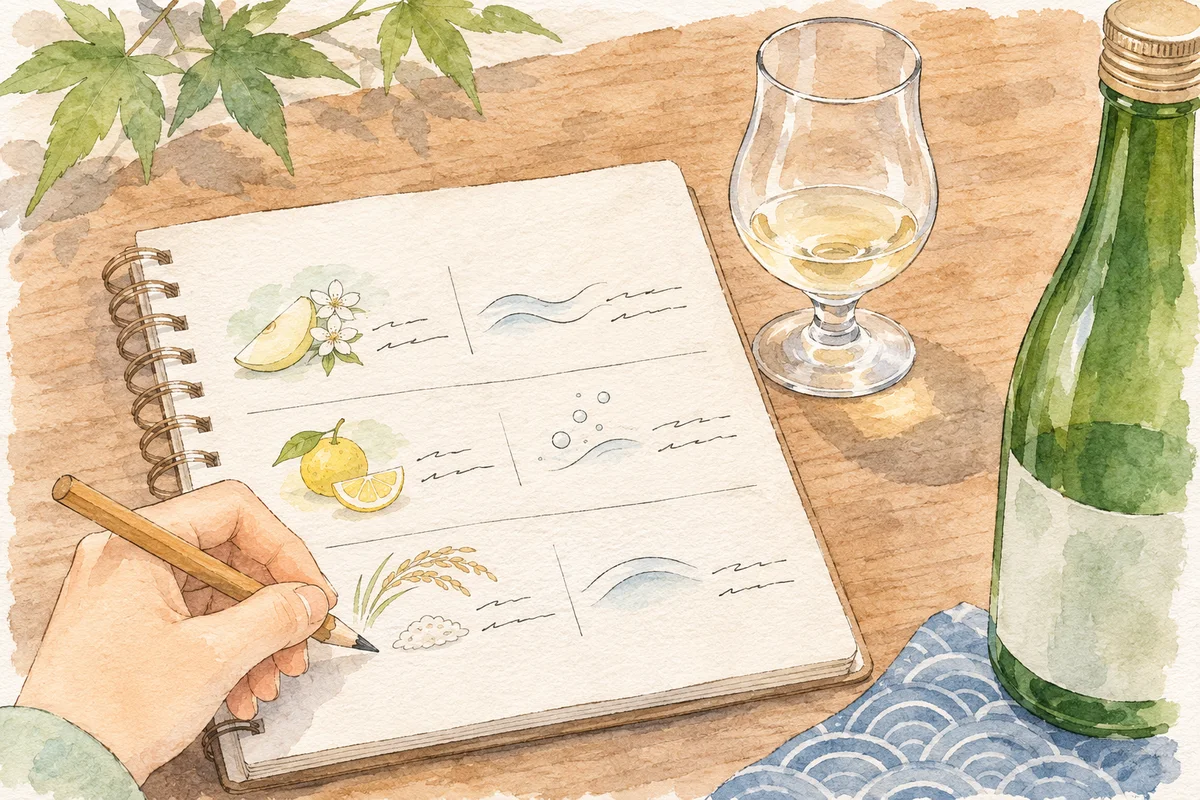
Try this with a bottle you already planned to enjoy, within its recommended window. On opening, note one aroma, one texture word and the finish. When you next serve it, use the same glass and a similar serving temperature. Compare your notes before deciding whether you prefer it. This keeps a change in serving temperature from masquerading as a storage revelation.
For example, your first note might say “melon, smooth, short finish.” The next might say “less melon, softer impression.” Either preference is yours to make. There is no need to open extra bottles or drink more to complete the comparison; a useful journal fits around the occasions when you would drink anyway.
In WhatSake, scan the label to identify the bottle and keep your tasting impressions with it. Add the opening date to your own note so future you has something better to work with than “the green one.” Before buying again, ask whether a smaller format is available and how it should travel home. A bottle that suits your pace is easier to enjoy well.