
TASTING · ONE BOTTLE, DIFFERENT TEMPERATURES
What temperature
should sake be?
Cool, warm,
or somewhere between.
Temperature can reveal another side of the same sake. Find a sensible starting point, learn the Japanese temperature names, and discover what changes as your glass warms or cools.
Find your starting point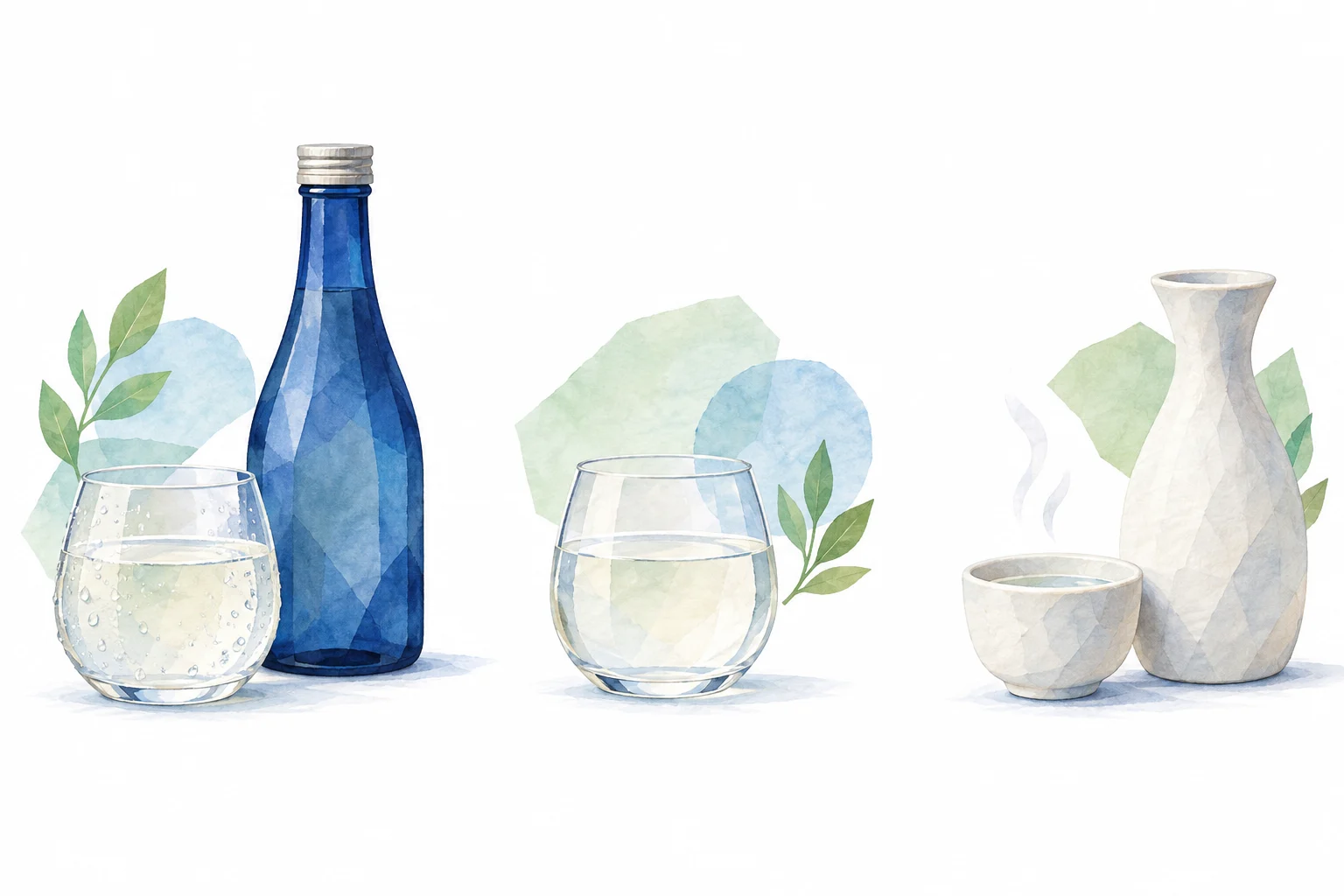
Then follow your own taste.
01 · BEGIN WITH THE BOTTLE
What is the best temperature for sake?
There is no single best temperature for every sake. Start with the producer’s recommendation, then explore a little either side of it.
Chilled, room-temperature and warmed sake can each be enjoyable. The aim is to find the balance of aroma, flavour and texture you like in that particular bottle.
Chilled
8–15°C 46–59°FAn accessible starting range for many fruity, aromatic styles. Very cold sake may reveal less aroma at first.
Room temperature
15–25°C 59–77°FA useful way to explore a still sake without strong chilling or heating. Your actual room may be warmer or cooler.
Gently warmed
40–50°C 104–122°FA familiar warm-sake range. Begin at the gentler end with a bottle the producer recommends for warming.
A bottle can need refrigeration even when you plan to warm a small serving. Follow its storage instructions and heat only the portion you want to drink.
Broad serving bands: JSS: how to serve sake. Individual preferences: National Research Institute of Brewing. Refrigeration guidance: Masumi: sake storage.
02 · EXPLORE THE RANGE
The sake temperature scale
From a cool first sip to a warm cup: choose a point on the scale to see its name and a tasting prompt.
The names below are approximate reference points, rather than exact boundaries. Measure the sake in the glass or serving vessel.
Yuki-hie
Snow-chilled. A very cold reference point.
Chilled sake
A useful first taste for many aromatic styles.
Suzu-hie
Cool, with less intense chilling.
Shitsu-on
A room-temperature reference.
Hitohada-kan
Near body warmth; gently warmed.
Nuru-kan
Pleasantly warm rather than piping hot.
Jo-kan
A distinctly warm cup.
Atsu-kan
A hot-sake reference point.
Names and approximate temperatures: JSS: sake temperature range · Gekkeikan: warm-sake temperature names. The interactive tasting prompts are WhatSake’s suggestions for comparison.
03 · LET THE STYLE GIVE YOU A CLUE
Which sake styles suit which temperatures?
Use these as first experiments. The bottle’s own advice takes priority, and categories overlap.
Fruity ginjo & daiginjo
Chilled is a useful starting point for delicate fruit and floral aromas. Then let a small glass warm a little and compare. Highly polished rice does not mean there is only one valid serving temperature.
Rice-forward junmai
For a still, savoury junmai recommended for warming, compare ambient and gently warm servings. “Junmai” alone is not a promise of a rich flavour: junmai ginjo and daiginjo can be aromatic too.
Honjozo & everyday styles
Many lightly aromatic examples make good warming candidates. Some are equally enjoyable chilled. Let the actual flavour and the label guide you.
Kimoto & yamahai
These words describe yeast-starter methods. Many fuller, savoury examples suit warming; they don’t require one universal temperature. Begin with the producer’s recommendation.
Nama & still nigori
Fresh, unpasteurised nama is commonly enjoyed chilled around 10°C. Nigori varies: Sayuri, for example, recommends chilled or room-temperature serving. Cloudiness alone doesn’t decide.
Sparkling sake
Use the producer’s chilled serving and handling advice. Keep sparkling bottles out of the warming experiment, including active sparkling nigori.
What about aged sake?
Aged sake varies considerably. NRIB notes that well-aged examples with rich acidity can be enjoyable warm. For a delicate aged bottle, ask the producer or shop for a starting point and compare gently.
Sources: NRIB: aromatic, nama and aged sake · Masumi: warming candidates and overlapping labels · Sayuri: serving suggestions · Masumi Sparkling: chilled serving. The junmai and honjozo ranges are WhatSake comparison starting points.
04 · SAME SAKE, ANOTHER SIDE
How temperature changes the taste
Aroma
Strong chilling can make aromas quieter. As sake warms, its aromatic character changes; delicate fruit notes may give way to more cereal-like impressions.
Flavour
Near body warmth, sweetness and umami can feel more pronounced. Excessive heat can make the sensation of alcohol sharper.
Texture
Temperature can change how dense or light sake feels. Compare the mouthfeel as well as the aroma, rather than judging only the first sip.
Instead of expecting a predictable “better” version, ask what has changed. Is the fruit clearer? Does the rice character stand out? Is the finish softer or sharper? A preference is something to discover, not prove.
Effects of temperature: JSS: aroma, flavour and texture. The comparison questions are WhatSake tasting prompts.
05 · KEEP IT COOL
How to chill sake at home
Read the storage and serving advice
Check whether the bottle needs constant refrigeration, and whether it gives a preferred serving temperature.
Chill the bottle in the fridge
For a first pour, follow the producer’s chilled recommendation. If you want precision, measure a small serving with a clean food thermometer.
Let a small glass warm naturally
If it seems very quiet straight from the fridge, wait a few minutes and taste again. Keep the rest of the bottle stored as its label requires.
It does not mean leaving a refrigeration-required bottle on the counter for storage. Bring only your small serving to the temperature you want to explore.
Sources: JSS: preparing chilled sake and tasting as it warms · Masumi: storage requirements.
06 · WARM A LITTLE, NOTICE A LOT
How to warm sake in a water bath
A small serving, a heat-safe vessel, hot water and a food thermometer give you control.
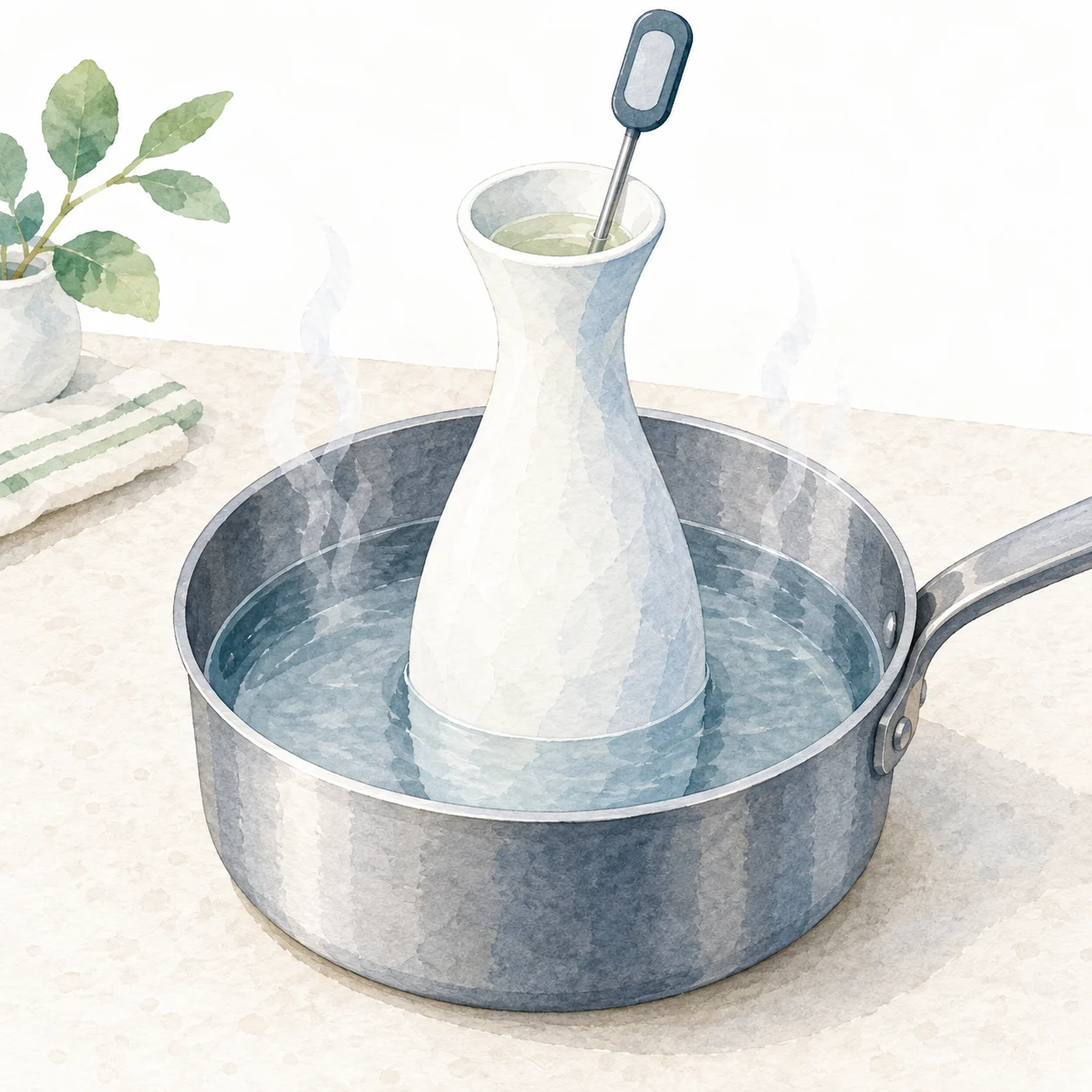
Pour a small portion
Use an open ceramic tokkuri or another vessel suitable for a hot-water bath. Leave space at the top. Choose still sake recommended for warming.
Prepare the water bath
Heat water in a saucepan, then take it off the heat. Stand the vessel in the hot water, keeping the water below its opening so it cannot enter the sake.
Check the sake’s temperature
Measure inside the sake with a clean food thermometer. For a gentle first experiment, aim around 35–40°C / 95–104°F if the bottle suits it.
Lift out and serve a little
Handle the warm vessel carefully, pour a small amount, and taste. Follow how its flavour changes as it cools.
Can I use a microwave?
Yes, with an open microwave-safe vessel and a small serving. Heat in short intervals, gently stir to even the temperature, and measure before serving. Time varies with the microwave, vessel and amount; one fixed time cannot fit every setup.
Should I make it piping hot?
Start gently. Hakutsuru notes that too much heat can upset the balance of taste and aroma. Explore hotter servings only when the producer recommends them for that bottle.
Water-bath method and gentle warming: Gekkeikan: warming sake · Hakutsuru: measuring temperature and avoiding excessive heat. Microwave heating: JSS: stirring for even heat · Gekkeikan: vessel, power and heating-time differences.
07 · TRY ONE BOTTLE THREE WAYS
A simple temperature tasting
Choose a still sake whose producer recommends more than one serving temperature. Use three small samples, rather than heating the whole bottle.
Sample one: chilled
Around 10°C 50°FNotice the aroma, first taste and finish. Does the sake feel compact, fresh or quiet?
Sample two: ambient
Around 20°C 68°FCompare the same amount in the same kind of cup. Which aromas or flavours are easier to notice?
Sample three: warm
Around 40°C 104°FFor a suitable bottle, compare a gently warm serving. Then taste it again as it cools.
Four things to note
Write one or two words for each sample. Try to keep the glassware and the food the same so temperature is the main thing you are changing.
For a concrete example, Gekkeikan Traditional lists chilled, room-temperature and warm serving options. That makes the producer’s own advice a useful starting point for this exercise.
Bottle example: Gekkeikan Traditional: recommended serving ranges. The three-sample exercise is WhatSake’s adaptation of the tasting approach in the original WhatSake article. Practise the senses in Tasting & serving.
08 · THE QUICK ANSWERS
Sake temperature questions, answered
Does warm sake mean cheap sake?
No. Warming is a serving choice. Masumi identifies fuller, earthy styles as warming candidates; temperature alone is not a quality rating.
Can ginjo or daiginjo be warmed?
Chilled is a good starting point for aromatic examples, but gentle warming can be an experiment when the producer recommends it. JSS describes gentle warming around 40°C as an option for some ginjo. The individual bottle matters.
Can I warm sparkling sake?
Use its chilled serving instructions. Keep sparkling bottles, including active nigori, out of a warming experiment. See the sparkling sake guide for handling advice.
How should I order warm sake?
Ask for nuru-kan if you want pleasantly warm sake, then ask which bottle the restaurant recommends at that temperature. You can also simply ask for a gentle warm serving.
Do I need a thermometer?
It helps if you want a repeatable comparison. Measure the sake itself and clean the probe between samples. Touching the outside of a vessel gives only a rough impression.
Is there one temperature for every junmai?
No. Junmai describes the absence of added brewer’s alcohol; its flavours vary. A rice-forward junmai and an aromatic junmai daiginjo may invite different starting points.
Sources: Masumi: warming styles, nuru-kan and junmai labels · Gekkeikan: gentle warming and measurement · JSS: warming ginjo · Masumi Sparkling: chilled serving.