
Sake vs soju: how they differ and what to order
Similar glasses, different drinks. The useful clues are on the label and in the making.
Sake is a Japanese alcoholic drink brewed from rice; soju is a Korean spirit made through distillation or by blending distilled alcohol with water and other permitted ingredients. They are different drinks, even when both look clear and arrive in small glasses. Soju is not automatically stronger or sweeter than sake: the particular bottle matters. Here is how to compare them, avoid confusing soju with Japanese shochu, and order something you actually want to drink.

In this article
In this article
Start with the drink, not the glass
On an English-language menu, “sake” usually means the Japanese rice drink also called nihonshu. In Japanese, sake can refer to alcohol more broadly, so nihonshu is a useful word when you want to be specific. “Soju” refers to the Korean drink. The similar-looking Japanese word shochu names another spirit, which we will come to below.
| Question | Sake | Soju |
|---|---|---|
| Origin | Japan | Korea |
| Core process | Rice fermentation, then separation of liquid from solids | Distillation, or blending neutral distilled alcohol with water and other ingredients |
| Ingredients | Rice, koji, water and yeast; some styles also use brewer’s alcohol | Grains or other starch sources; the recipe depends on the style and producer |
| Best label clue | Style, actual ABV and serving advice | Distilled or diluted style, flavouring and actual ABV |
Think of this as a way to ask better questions, not a ranking. A fruity sake, a savoury sake, a neutral diluted soju and a characterful distilled soju can offer very different experiences. Choosing between them is more useful than deciding which country “wins” the drinks list.
Brewing and distilling do different jobs
Rice contains starch, which yeast cannot simply turn straight into alcohol. In sake brewing, enzymes from koji—rice cultivated with a useful mould—break starch into sugars. Yeast turns those sugars into alcohol. These activities run alongside one another in the main mash, rather than following the grape-juice model of winemaking. The Japan Sake and Shochu Makers Association explains this parallel fermentation.
Distillation comes after a ferment has already produced alcohol. Heating a fermented liquid or mash sends volatile components, including alcohol and aroma compounds, into vapour; cooling that vapour collects a distillate. This separates and concentrates a different set of components. It does not manufacture alcohol from raw rice by itself. The National Research Institute of Brewing explains the principle.
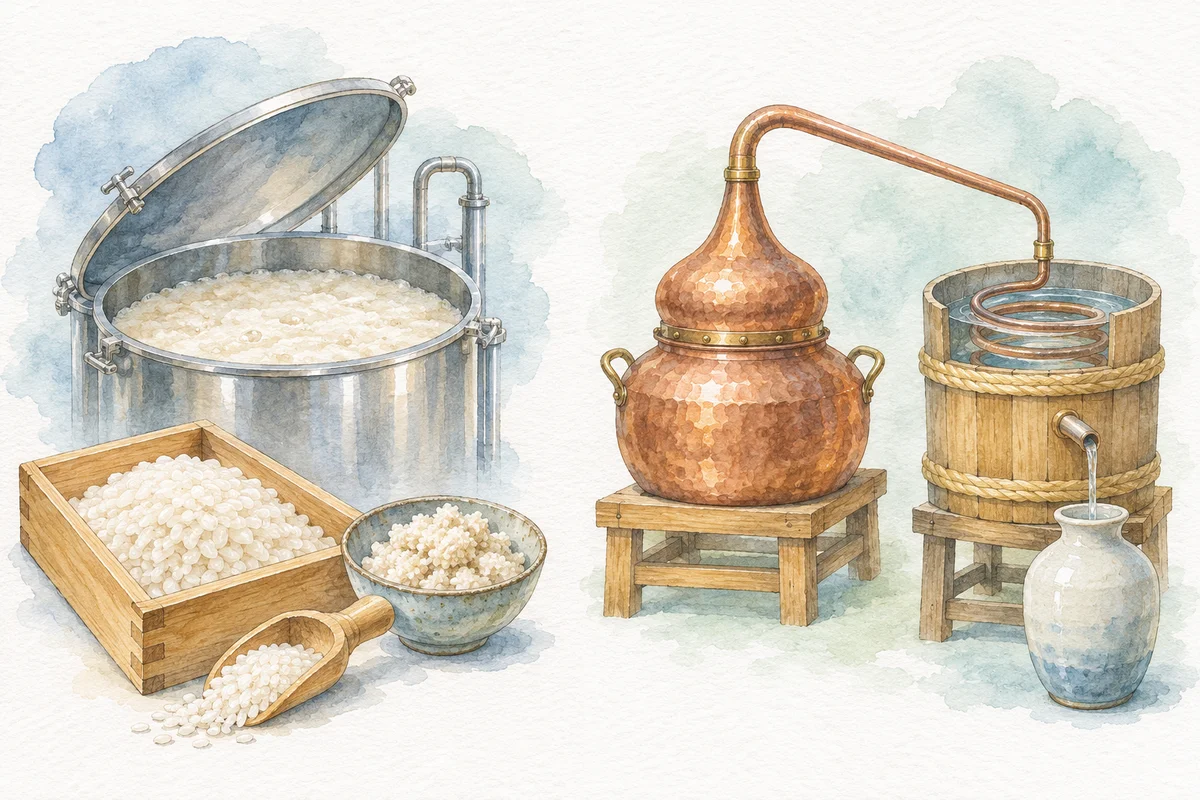
Sake remains a brewed drink even when a permitted amount of distilled brewer’s alcohol is added to a style such as honjozo. That addition is different from putting the entire sake through a still. For the full rice-to-bottle story, follow our sake fermentation guide; you do not need to memorise every brewing term to order dinner.
Soju has two stories worth knowing
Traditional distilled soju starts with a fermented grain base. Korea Tourism Organization describes Andong soju made with rice, water and nuruk, a traditional fermentation starter, before distillation. Nuruk and sake koji both help make grain fermentation possible, but they are not interchangeable names for an identical starter. The official Andong introduction also describes different distillation approaches and their influence on aroma.
Diluted soju takes a different route: concentrated neutral alcohol is blended with water, with sweeteners or flavourings depending on the product. Its alcohol can come from several starch or sugar sources, rather than exclusively rice. The National Folk Museum of Korea distinguishes these two soju categories. Adding water alone is not the test: a traditional distillate may also be adjusted with water before bottling. Ask how the alcohol was made.
The green-bottle style has an industrial history, not just a different colour of glass. The museum traces large-scale diluted-soju production to the colonial period and describes how later rice-rationing policies disrupted grain-based distillation. That history helps explain why a familiar inexpensive style and a grain-focused distilled style now share one name. Treat them as different choices, rather than assuming one bottle tells the whole story.
Compare taste and strength separately
Sake can offer fruit-like aromas, rice or cereal notes, and umami, a savoury taste. It ranges from light and crisp to rounded and rich. A melon-like aroma need not mean that melon was added: brewing can create fruity aroma compounds. The JSS and NRIB sake guide explains its flavour components. Choose a particular style rather than expecting every sake to taste like a sweet rice dessert.
With soju, distinguish a relatively neutral diluted style from a more expressive grain distillate, then check whether it is flavoured or sweetened. “Soju is sweeter” is too blunt a rule: a fruit-flavoured product and a traditional unflavoured distillate are different comparisons. Ask for “unflavoured, with a dry impression” or “gently sweet and fruity” if those are your preferences, then let the server identify a suitable bottle.
ABV means alcohol by volume. It describes the proportion of alcohol in the drink, not how sweet or smooth it feels. Many sake bottles sit around 15–16%, but there are exceptions. Soju strengths vary enough that “a spirit must be stronger” fails as a shopping shortcut. A 16% soju and a 16% sake have the same alcohol concentration.
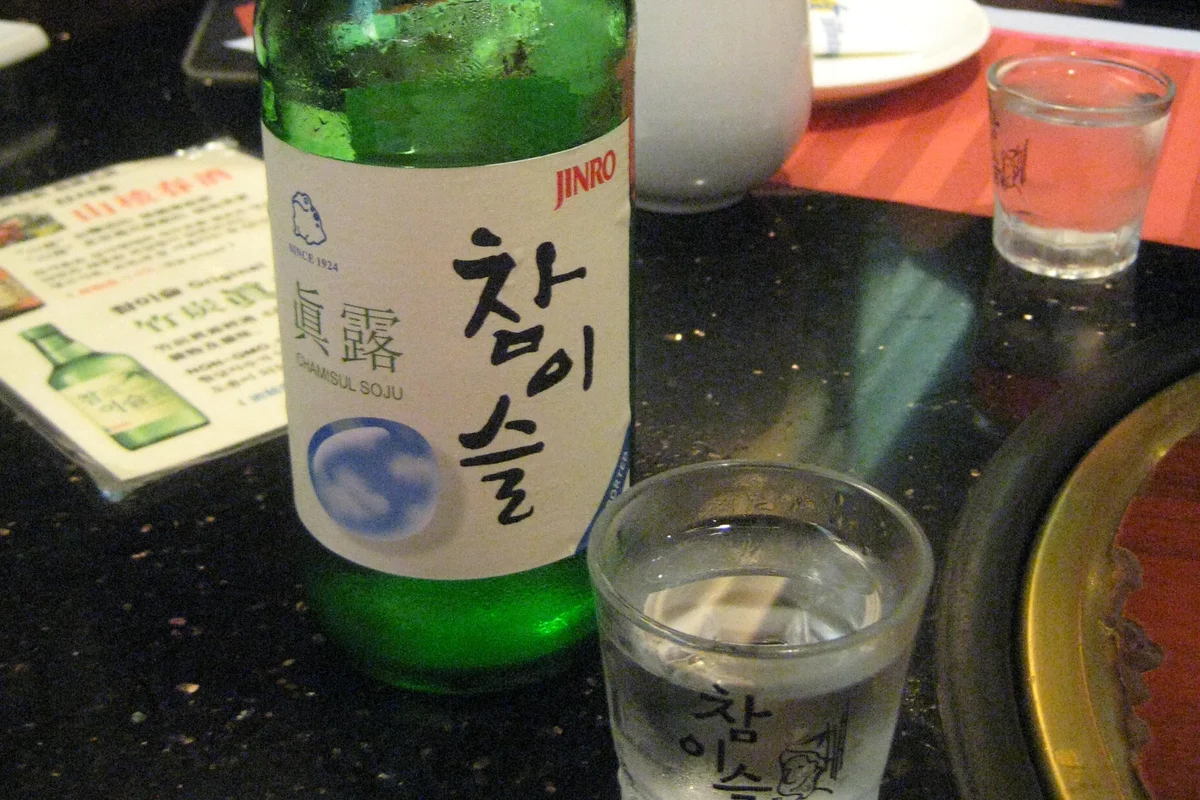
A concrete label check, verified on 28 November 2026: JINRO’s official pages list Chamisul Fresh at 16% and Ilpoom at 25%. These are examples, not recommendations or permanent specifications; check the bottle sold in your market. For a hypothetical 30 ml pour, 16% represents 4.8 ml of pure alcohol and 25% represents 7.5 ml. The same small glass can therefore carry a different amount.
Where Japanese shochu fits
Shochu is a Japanese distilled spirit, so its production is closer in broad outline to distilled soju than to sake. It can use rice, barley, sweet potato or other permitted ingredients. Honkaku shochu is a single-distillation category that retains character from its raw material. It is not the name for every Japanese distilled product. The JSS shochu comparison explains the distinction.
A useful menu question is “Is this nihonshu, Japanese shochu or Korean soju—and how is this particular one served?” Shochu may arrive with water, hot water or ice, while a sake service may be chilled or warmed. These are serving choices within different traditions, not a rule that clear drinks all belong in a shot glass. Read the menu’s category and the bottle together.
Choose for the meal, then keep a useful note
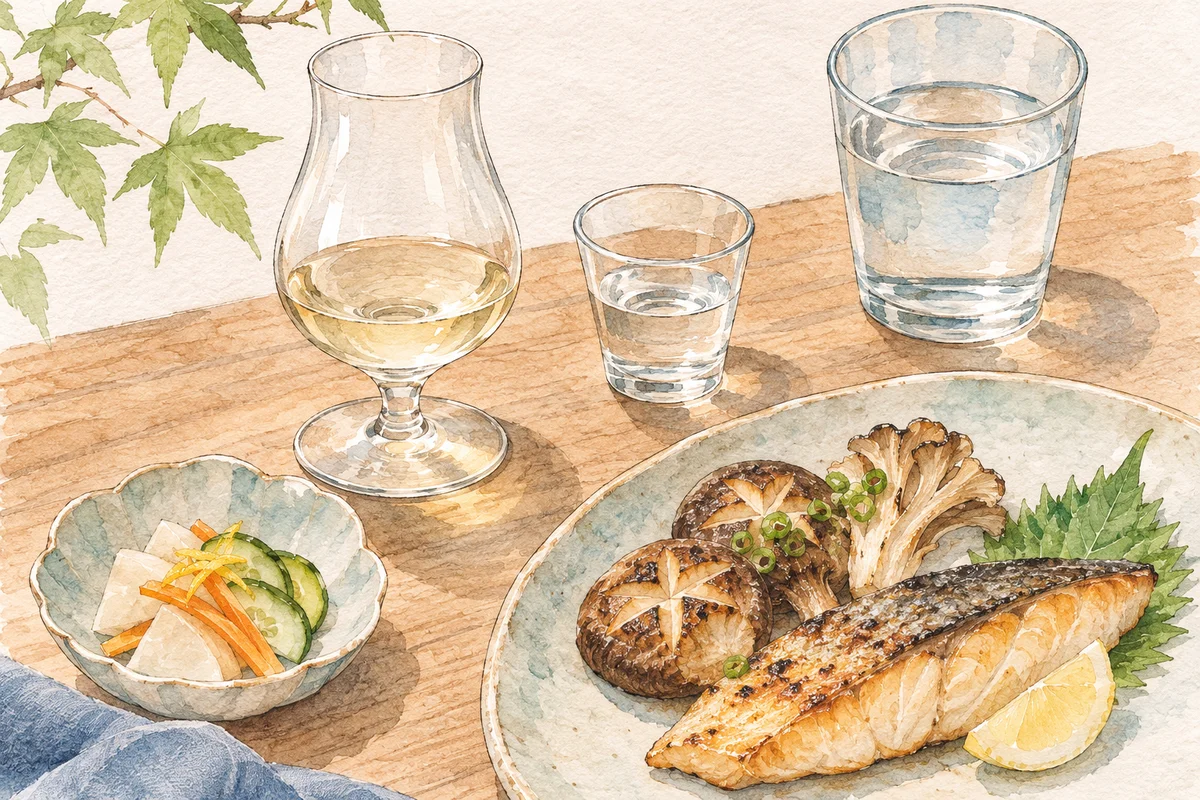
Start with the experience you want. For an aromatic glass to sip with dinner, ask about a fruity sake or an expressive distilled soju. For a comparatively neutral accompaniment, ask about an unflavoured diluted soju. If sweetness matters most, say so explicitly. None of those requests guarantees a match; they give a knowledgeable server something much better to work with than “whichever is strongest.”
Grilled fish or mushrooms make a useful starting point for exploring a savoury sake; a lightly seasoned dish can also make it easier to notice the grain character of a distillate. These are our tasting suggestions, not fixed national pairing rules. A sweet glaze or sharp pickle may change your impression, so compare a sip before and after a bite. Our food-pairing guide develops that approach.
If you already have an occasion to compare two drinks, keep the observation simple: one aroma, one texture word, and what remains after the sip. Record the label and ABV before writing “sake” or “soju” as though that were the whole description. There is no need to finish either glass, or buy a full tasting lineup to learn one useful difference.
For the sake you choose, scan the label with WhatSake and save your own tasting impression with the bottle. Keep a separate note for the soju comparison rather than assuming a sake-focused scanner identifies every spirit. Next time you see the two names on a menu, you will have a specific question—and a memory of what you liked.