
WHATSAKE · WHATSAKE STORIES
Meet your WhatSake Sake Persona
Your favourites, turned into a conversation.
Read the story
CHAPTER 01
A useful description of what you enjoy
You remember loving a bottle, but explaining why can be harder. Was it fragrant, savoury, fresh, soft or simply perfect with dinner? A Sake Persona gives you a starting vocabulary for that conversation.
WhatSake AI analyses the sake in your favourites when you choose to generate a profile. The result is a written persona and recommendations. As your favourites change, you can regenerate the profile; the published feature description says this happens on demand.
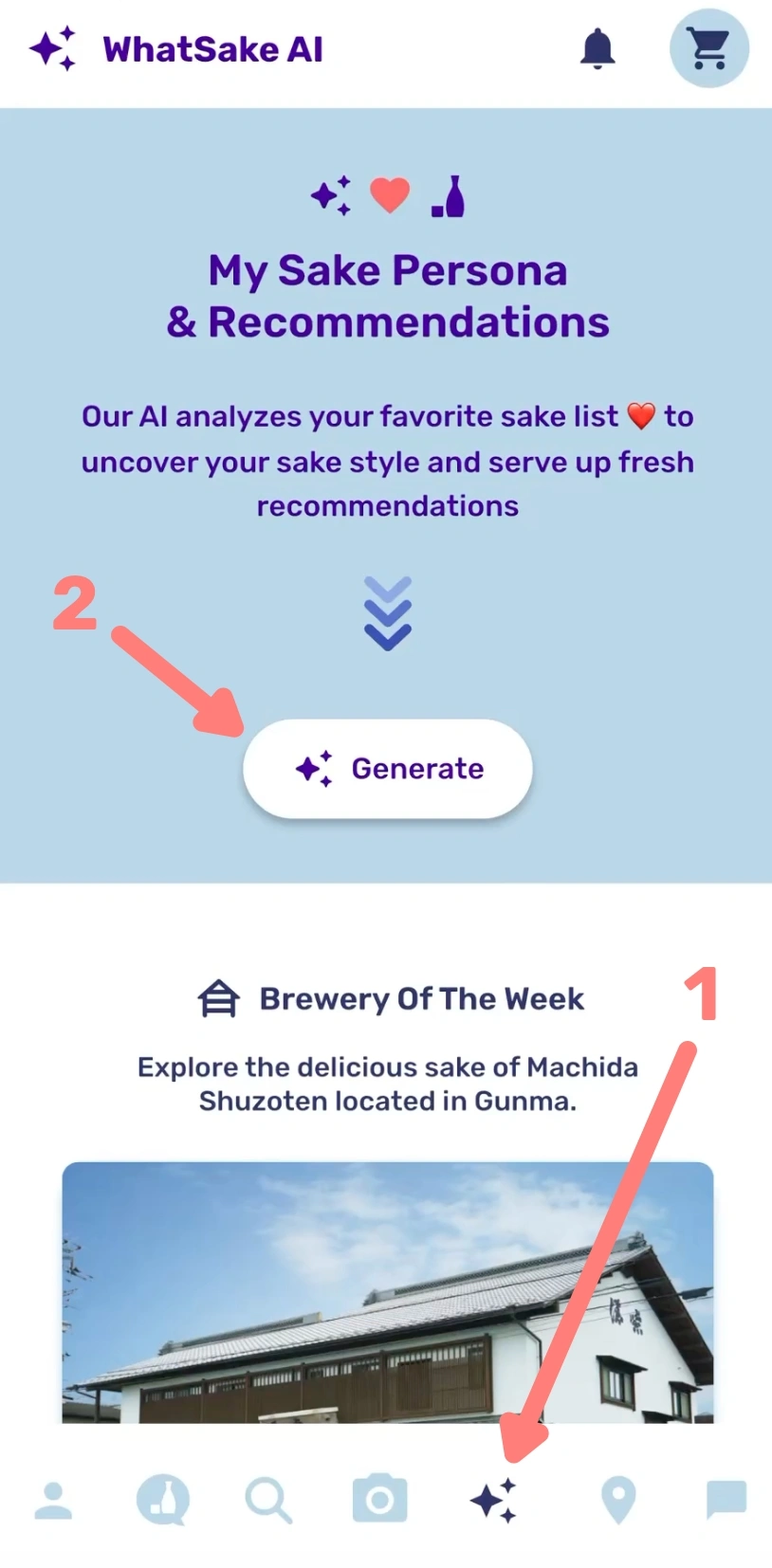
Treat the output as a helpful reading of a list, rather than a verdict about your palate. A favourite can reflect a special occasion or a memorable meal as much as a repeatable flavour preference.
Sources: WhatSake: feature description
CHAPTER 02
A quick look at the AI screen
This short original preview shows the WhatSake AI screen and its Generate button. Press play for a closer look, then follow the steps in the app.
1 · Open AI
Use the sparkle icon in the bottom navigation.
2 · Generate your persona
Choose Generate to build a profile from your favourite sake.
3 · Come back as you explore
After your favourites change, use Regenerate to revisit your profile.
CHAPTER 03
Give your favourites some context
Before looking for a pattern, it helps to remember the experience behind each bottle. Keep a short personal note: what was served, how it was served, and what you would want to repeat. You do not need a specialist tasting vocabulary.
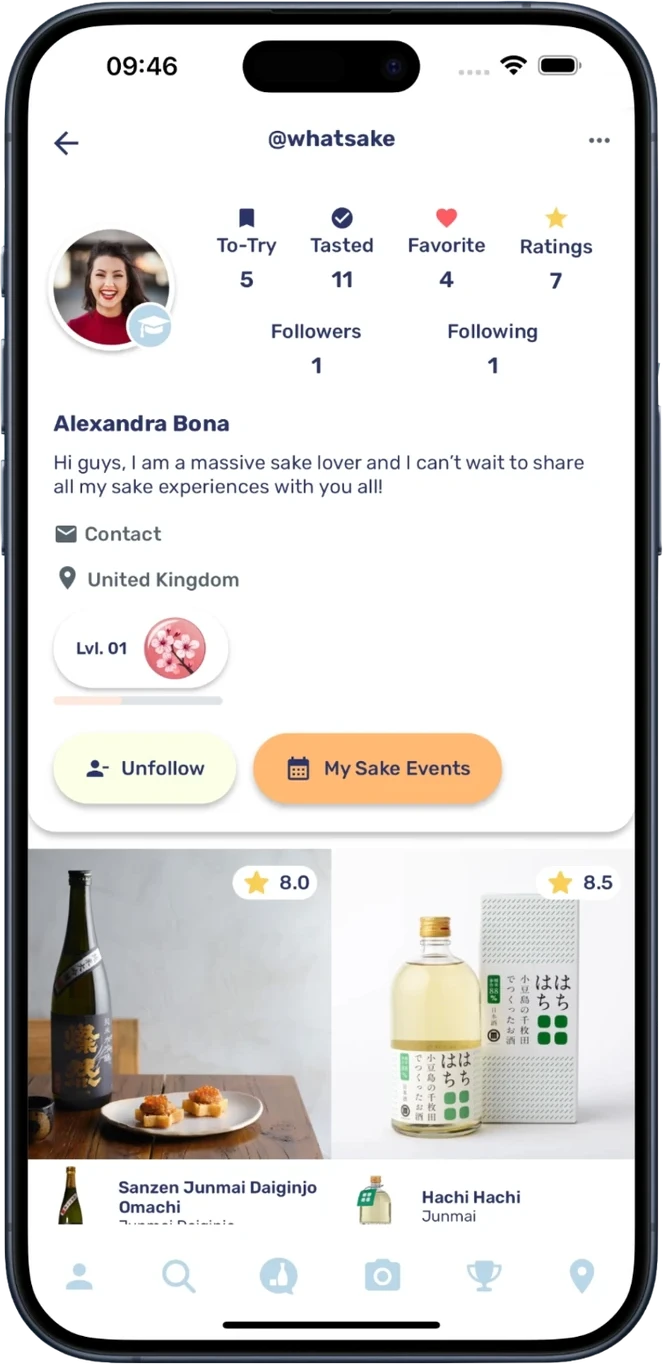
The bottle
Record the producer and the exact product. A brewery can make several very different styles.
The moment
Was it chilled with a meal, warmed in a small cup, or tasted at an event?
The reason
Write one concrete thing you enjoyed: a bright aroma, a savoury finish or a texture.
These are suggestions for your own tasting practice, not extra information we claim the AI reads. The feature announcement describes the favourites list as its input. Do not assume a diary note, conversation or unrelated activity is included.
Sources: WhatSake: AI inputs
CHAPTER 04
Turn a recommendation into a tasting idea
The most useful recommendation gives you a direction for a comparison. Perhaps it suggests another aromatic bottle, or something with more savoury depth. The next step is to look at the actual product, not only the category printed beside it.
Ask a retailer or restaurant for the producer’s description, the serving recommendation and the bottle they have available. The same brand name may cover several products; availability also changes between places.
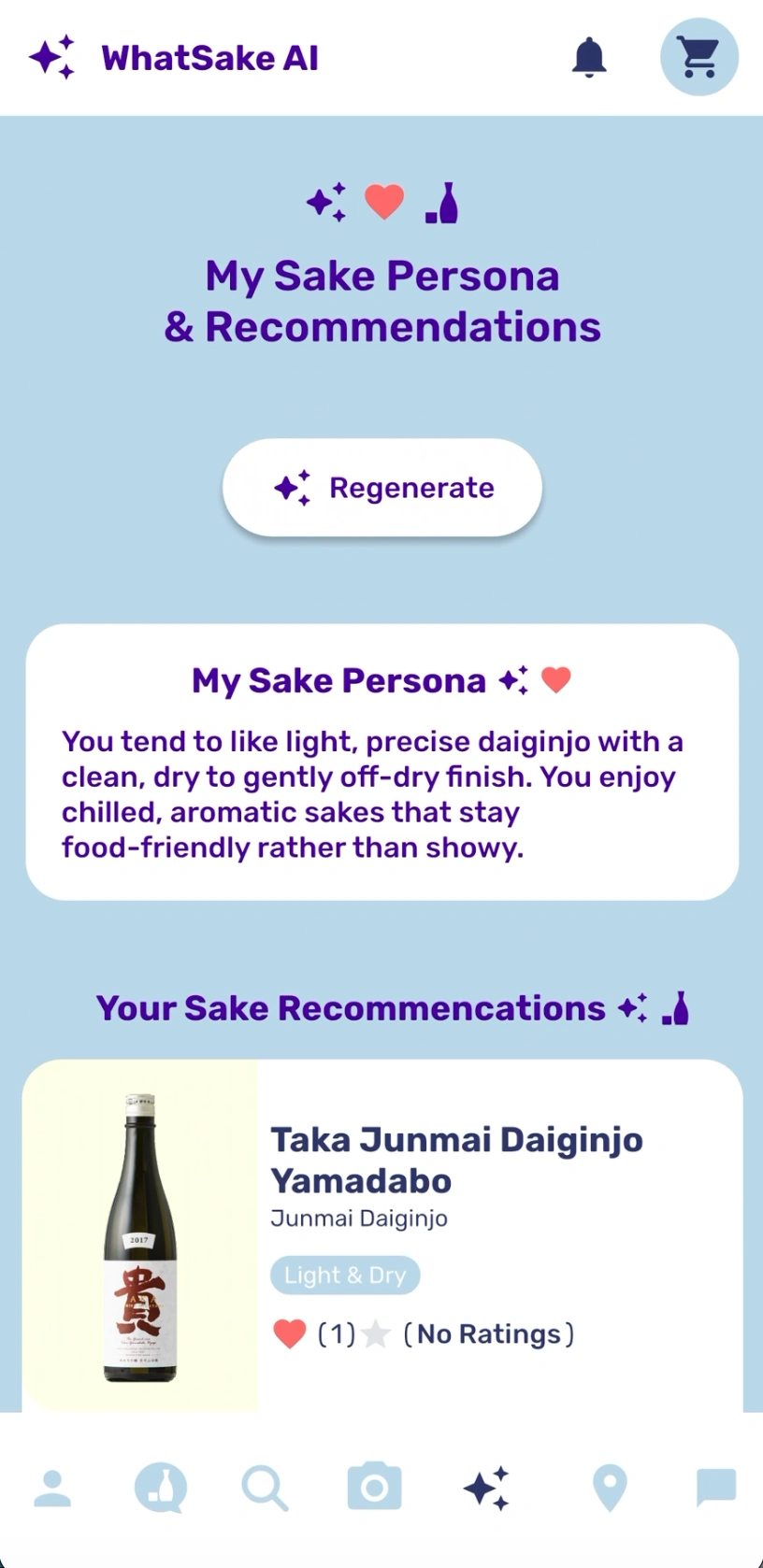
A familiar direction
Find a bottle that shares something you already enjoy, then notice the differences.
A small stretch
Change one dimension—perhaps more savoury, less fragrant or a different serving temperature.
A useful alternative
If the suggested bottle is unavailable, explain the taste direction and ask for a local substitute.
You do not need to follow every suggestion. A recommendation is doing its job if it helps you make a more informed choice or explain your preferences.
Our types and styles guide helps translate category names without turning them into promises.
CHAPTER 05
A persona works best in your own words
At a restaurant, a short request is often more useful than reading out a long profile. Bring together a flavour preference, the meal and the kind of experience you want.
If you like fragrant sake
“I enjoy floral or fruity aromas. Is there a bottle you would recommend with this dish?”
If you like savoury sake
“I tend to enjoy a fuller, rice-led flavour. What would you try with this food?”
If you want to explore
“This is the style I usually enjoy. Could you suggest one step in a different direction?”
These examples are conversation starters, not translations of guaranteed AI outputs. You can simplify them even further: “I liked this bottle; what makes a good comparison?” Showing a clear bottle name can solve more than searching for the perfect adjective.
Listen to the explanation, then decide whether the suggestion sounds appealing. Your preference can change with the dish or occasion without making the earlier persona wrong.
CHAPTER 06
Refresh when your favourites tell a new story
The feature announcement describes a profile that you can regenerate as your favourites grow. It is useful to revisit the result after a meaningful change in what you have enjoyed, rather than expecting it to update itself.
Compare the old and new descriptions informally. Which words still fit? Which feel less convincing? If you have recently explored warmer serving or a new region, the result may give you a fresh starting point for the next conversation.
Avoid making the profile a target. You do not have to choose bottles that prove you are an “aromatic” or “adventurous” drinker. The purpose of keeping favourites is to remember what you enjoyed, not to maintain a consistent identity.
Sources: WhatSake: regeneration
CHAPTER 07
A few useful expectations
Does this page generate my real persona?
No. Your personal profile is generated inside the WhatSake app. This article explains how to approach the feature.
Can a recommendation guarantee I will like a bottle?
No. Use it as a starting point, then consider the actual product, serving conditions and your own impression.
Do I need technical sake knowledge first?
You can start with words you already use for food and drinks. The Learn guides are there when you want more context.
Where do I get WhatSake?
Use the download links on our homepage to open the relevant app store.