
CULTURE · WHATSAKE STORIES
Sake health benefits: what does the evidence show?
A good story still needs good evidence.
Read the story
CHAPTER 01
The short answer comes first
The evidence discussed here does not justify drinking sake to improve your health. Sake contains alcohol, and its cultural value or fermentation ingredients do not remove alcohol-related risks.
WHO identifies alcohol as a cause of cancer and states that no safe consumption level has been established for cancer risk. That is a population-level risk statement; it does not mean every individual has an identical risk or that a single drink inevitably causes disease.
The interesting question is how a headline can jump from “a compound has an effect” to “this drink is good for you”. Several different things may be hiding under the word sake: the beverage, the solid brewing residue, an extracted ingredient or a cosmetic formulation.
Sources: WHO: alcohol and cancer
CHAPTER 02
First ask what was actually tested
Evidence is tied to the thing tested. A substance in a laboratory dish, a cream applied to skin and a beverage consumed with food are different exposures. The preparation, concentration and route can change what a result means.
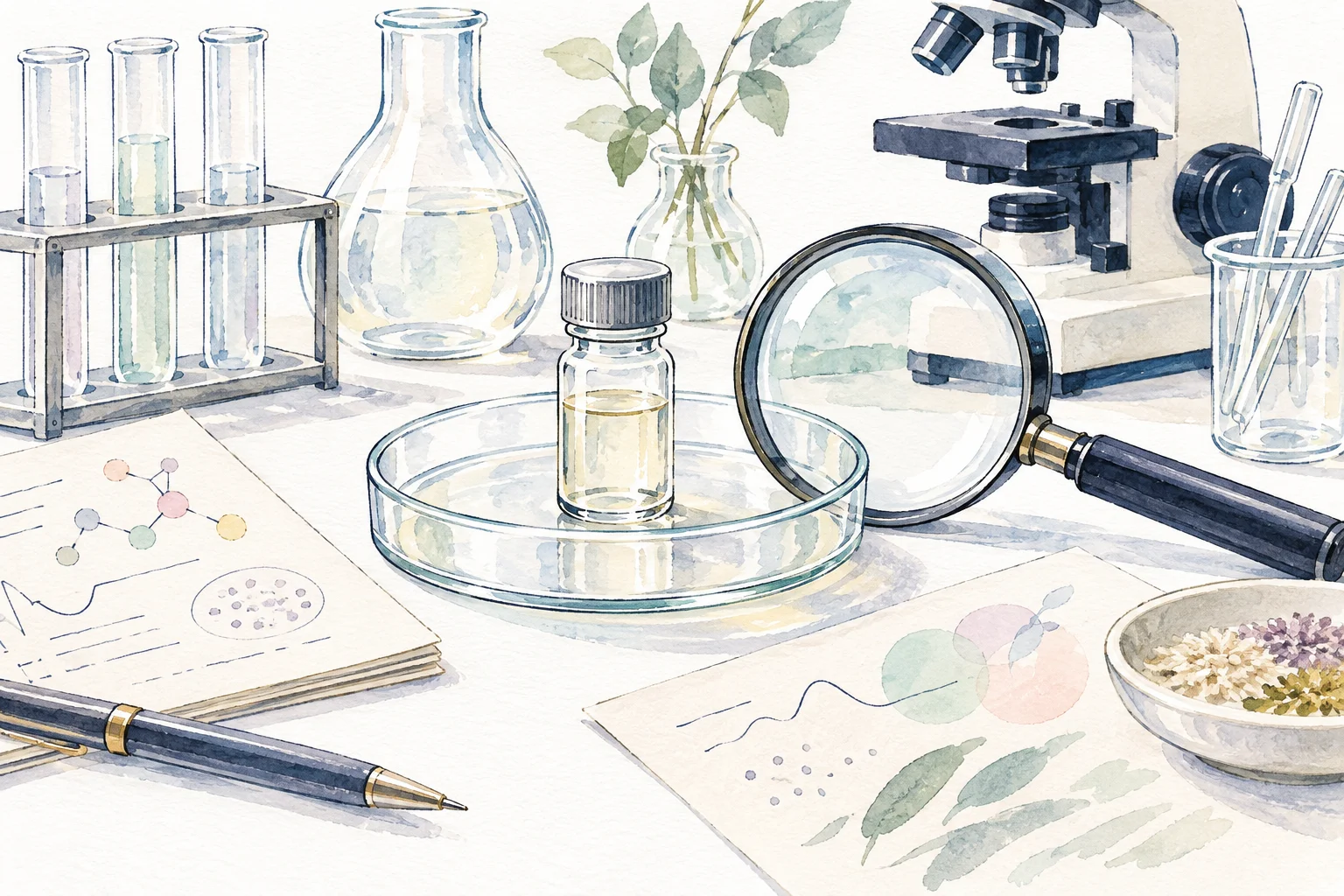
An ingredient
A study of an isolated compound cannot automatically establish the effect of the finished drink.
A laboratory result
An effect in cells or an assay is a research clue, not the same as improved health in people.
A human outcome
The useful question is what happened to people, under what conditions and compared with what.
This does not mean laboratory research is unimportant. It means the research has a scope. The gap between a mechanism and a reliable recommendation is where further study belongs, rather than a marketing conclusion.
Keep the question precise: “Did this test ordinary sake drinking and a meaningful health outcome?” If the answer is no, the headline needs to say what the study actually supports.
CHAPTER 03
Association is not proof of a heart benefit
People who drink small amounts can differ from people who do not drink in many ways. A study may observe different outcomes without showing that the alcohol caused the difference. The comparison group matters too: lifelong abstainers and people who stopped drinking after illness are not interchangeable.
A 2023 systematic review in JAMA Network Open examined 107 cohort studies. After accounting for former-drinker bias and other quality factors, it did not find a statistically significant reduction in all-cause mortality among occasional or low-volume drinkers compared with lifetime abstainers.
That analysis is not a sake-specific clinical trial and does not settle every disease question. It does show why a simple “moderate drinkers did better” headline is not enough to recommend alcohol for health.
Sources: Zhao et al.: cohort-study review
CHAPTER 04
A skin-care ingredient is not a drinking study
Kojic acid and fermentation-related ingredients appear in skin-care conversations. That can make a claim about sake sound plausible even when the research did not involve anyone drinking sake.
For example, a published study of 80 patients with melasma compared topical cream formulations over 12 weeks. It included kojic acid alone and combinations with other active ingredients. This was research about creams applied to a particular skin condition, not a test of sake as a drink.
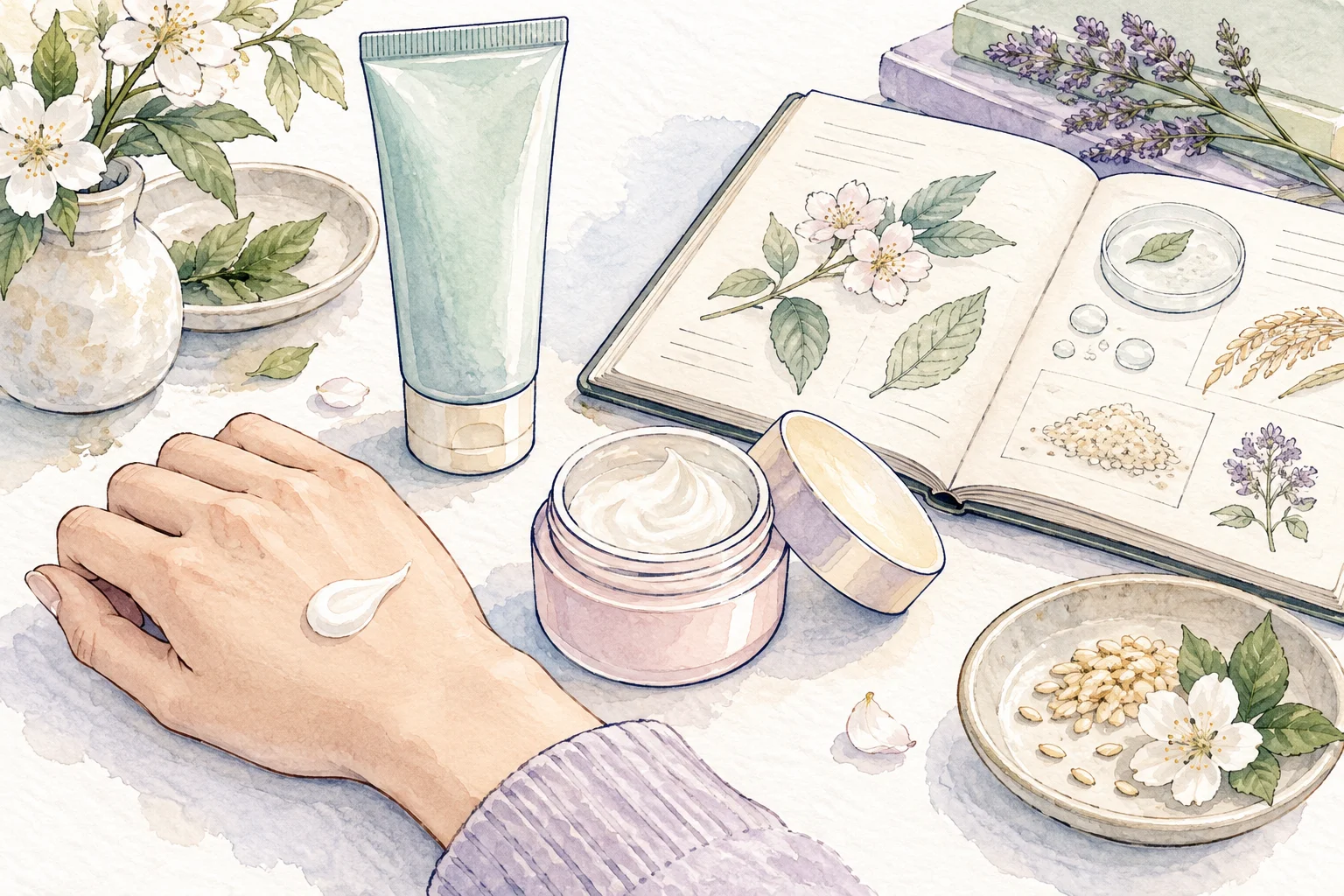
You cannot carry that result across to hydration, general anti-ageing or protection from sunlight by drinking an alcoholic beverage. The product, dose, route and outcome have changed. Nor does this article recommend applying sake to your skin.
When reading a cosmetics story, look for the exact formulation. “Contains something associated with fermentation” is much less informative than a description of what was applied and what the study measured.
Sources: Deo et al.: topical melasma trial
CHAPTER 05
Amino acids and antioxidants need context
The ordinary biological importance of a nutrient is not evidence that an alcoholic drink is a useful way to obtain it. You would need information about amount, absorption, the serving tested and the resulting health outcome.
An antioxidant assay can describe an activity under laboratory conditions. It does not establish that a sake serving improves circulation or prevents disease in people. Be cautious when the sentence changes from “this sample showed activity” to “you will benefit”.
Comparing sake with wine or beer by highlighting one fashionable compound also leaves the bigger question unanswered. A net-health comparison would need to consider the actual quantities consumed and the relevant benefits and harms, rather than selecting one appealing ingredient.
None of these points requires claiming that a particular molecule is absent from sake. The issue is whether the evidence establishes the promised benefit from drinking the finished beverage.
CHAPTER 06
Five questions for the next headline
1. What was the test material?
A normal beverage, brewing residue, extract or topical cream?
2. Who was studied?
People, animals, isolated cells or no living participants?
3. What was the exposure?
How much, how often, and by which route?
4. What outcome changed?
A lab marker, a symptom, an actual disease outcome or a marketing description?
5. What was the comparison?
Was it fair, were confounders addressed, and has the result been reproduced?
A headline can be interesting while the answer to one of these questions remains uncertain. That is a reason to describe the uncertainty clearly, not to fill it with a promised benefit.
This checklist is a reading tool, not a substitute for professional advice. A personal health decision needs context that a general sake article does not have.
CHAPTER 07
Keep the honest reasons to enjoy the subject
Does “natural” sake remove alcohol risk?
No. NIAAA describes risks across drink types, including at low amounts. A production adjective does not remove the alcohol.
Does a cosmetic study prove sake is good to drink?
No. It supports conclusions about the tested formulation and route, not a different drink or exposure.
Can I enjoy sake culture without drinking?
Yes. Brewing history, rice cultivation, regional traditions, films and conversations can all be explored without consuming alcohol.
Where can I understand strength and serving volume?
Our practical sake health guide explains ABV, measured volume and UK alcohol-unit arithmetic.
Craftsmanship, flavour and cultural curiosity are honest reasons to be interested in sake. They do not need an unsupported wellness promise attached. For labels and measured amounts, read sake and health: read the bottle clearly.
Sources: NIAAA: alcohol effects